
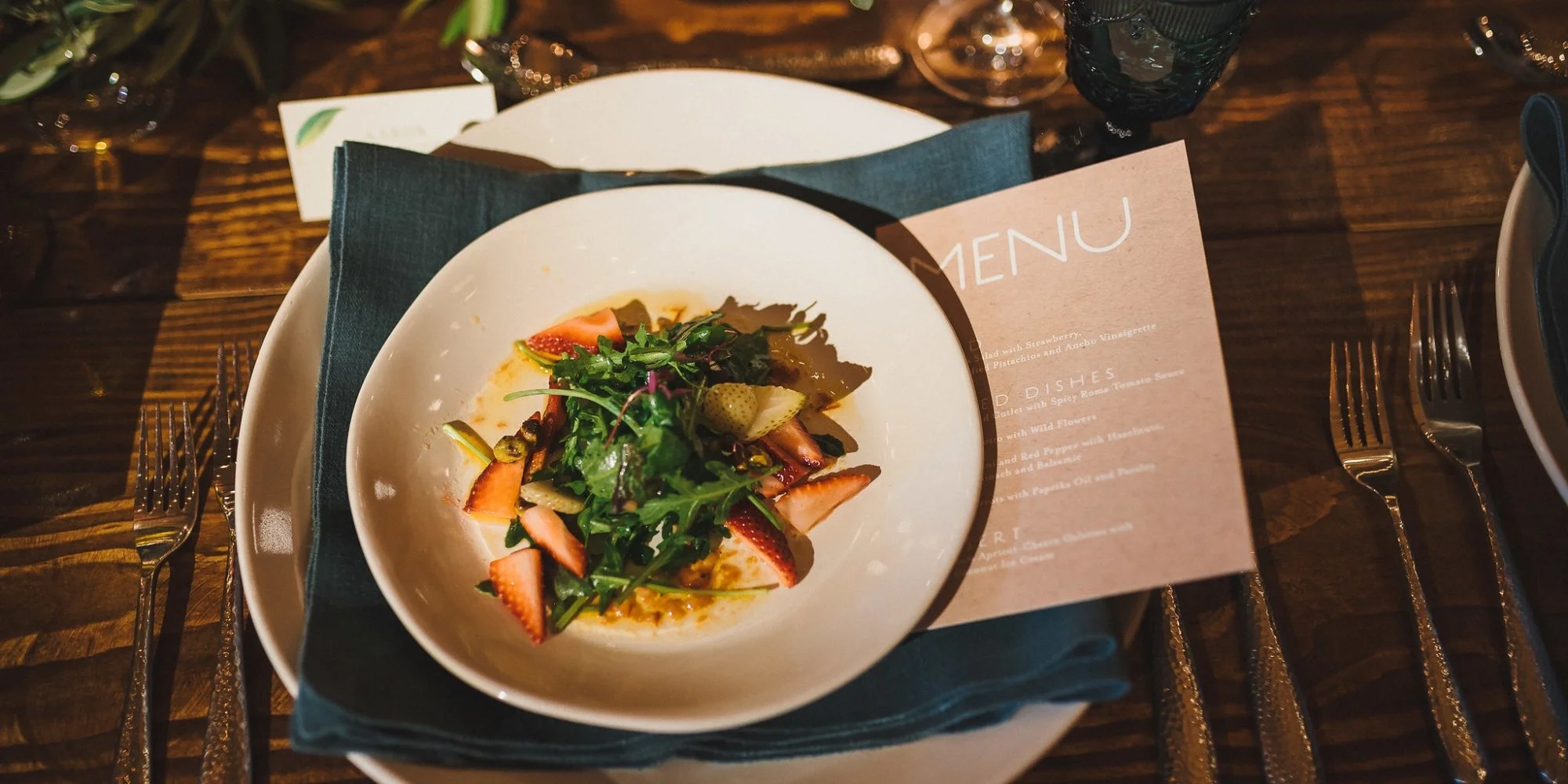
Wedding dinner sets aside a meaningful stretch of the celebration for everyone to eat, talk, and gather. How you serve that meal shapes what happens around those tables. The types of catering services you choose affect pacing, guest movement, menu possibilities, and even the room setup.
At Culinary Eye, we consider each of those details alongside the food. Here’s how buffet, plated, and family-style service differ, and what each brings to a wedding.
Quick answer: The three most common wedding meal-service styles are buffet, plated, and family-style catering. Buffet service gives guests flexibility and choice, plated service provides a structured tableside meal, and family-style service invites guests to share dishes at the table.
Types of Wedding Catering Services Compared
Buffet service gives guests freedom to choose and move around. Plated service keeps dinner structured at the table. Family-style service keeps guests seated while they share dishes with one another.
Staffing, pacing, menu choice, and space requirements also vary between each approach. Comparing the types of catering services side by side makes those practical differences easier to see:
| Consideration | Buffet | Plated | Family-Style |
|---|---|---|---|
| Guest movement | Guests visit serving stations | Guests remain seated | Guests remain seated |
| Meal pacing | Tables may eat at slightly different times | Courses follow a coordinated schedule | Tables move through shared dishes together |
| Menu choice | Guests choose from available dishes | Guests receive selected or preselected courses | Guests choose portions from shared dishes |
| Service needs | Staff maintain stations and replenish food | Staff coordinate plating and course delivery | Staff deliver, monitor, and replenish shared dishes |
| Table space | Serving food stays away from dining tables | Plates arrive individually | Platters and bowls need space on each table |
| Guest interaction | Guests interact while moving between stations and tables | Dinner keeps guests seated with their table | Passing and serving food becomes part of dinner |
| Space planning | Requires room around serving stations | Requires clear routes from kitchen to tables | Requires tables that comfortably hold shared dishes |
| Dietary meals | May require separate dishes or designated serving areas | Individual dietary plates can be assigned to guests | Separate dishes may be needed for specific guests |
| Dining experience | Choice, flexibility, and guest movement | Coordinated timing and structured service | Shared, conversational dining |
Price depends on more than the serving style. Menu complexity, staffing, rentals, equipment, guest count, and venue conditions all affect the final cost. Compare what each approach requires for your wedding rather than assuming one will always cost less.
Buffet Catering: How It Works for Weddings
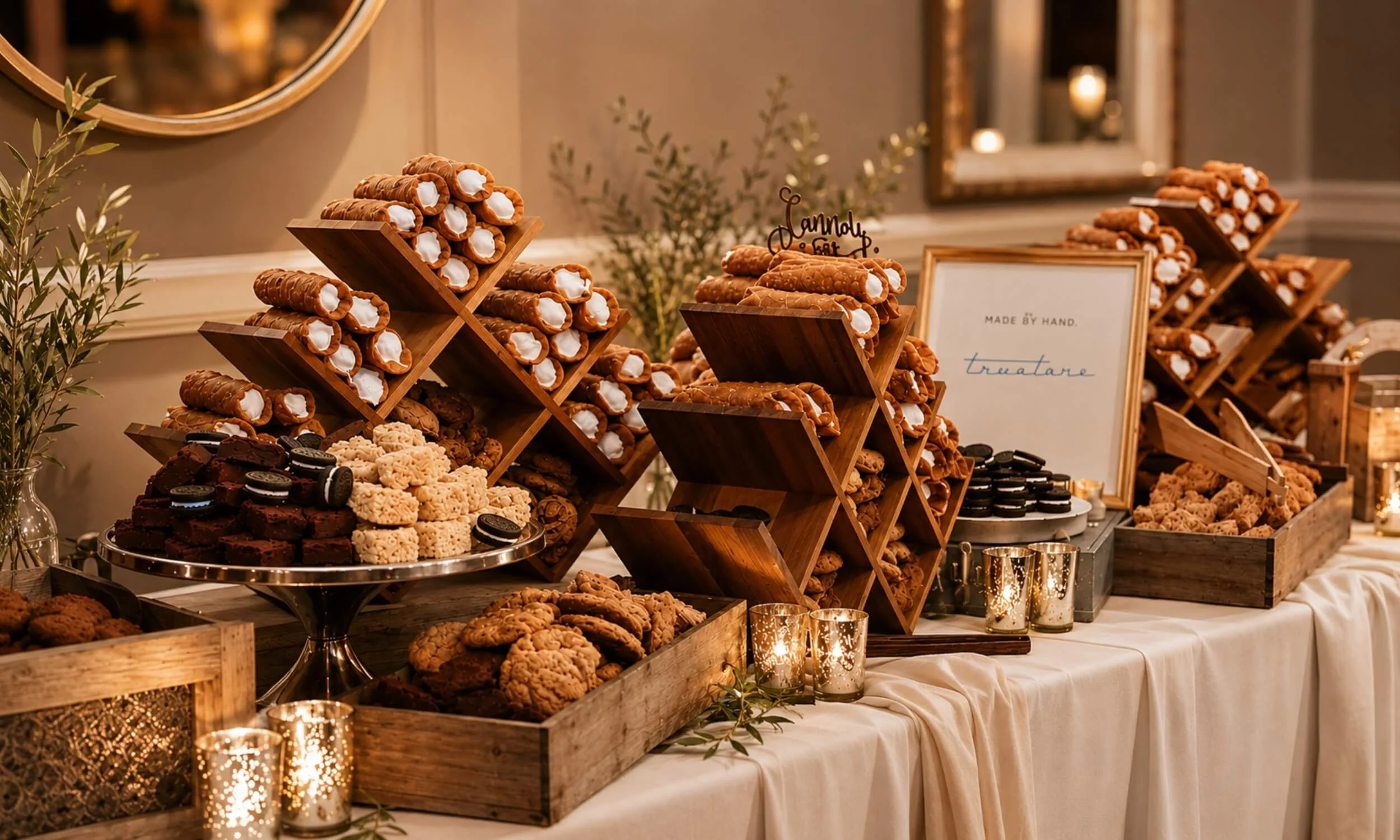
Buffet service brings guests to the food rather than bringing each meal to the table. Station layout and access become especially important when evaluating the types of catering services for a reception with plenty of guest movement.
A successful buffet involves more than setting food on a long table. The team needs to consider how guests will move through each serving area throughout dinner.
Buffet service may work particularly well when:
You want to offer several choices: Guests choose among proteins, vegetables, sides, and other dishes without selecting an entrée beforehand.
Guests prefer flexible portions: Each person decides how much to take based on appetite and preference.
The venue has suitable serving areas: Stations need enough space for guests to approach, make selections, and return to their tables.
The event allows a flexible dinner pace: Tables visit the buffet in groups rather than receiving every meal simultaneously.
The menu works across multiple stations: Separate serving points help manage larger groups while giving different dishes their own presentation.
The team can replenish efficiently: Staff replace dishes before they run low while keeping serving areas clean and easy to use.
Guest count and accessibility also matter when comparing buffet vs. plated dinner. Larger weddings may need several serving points to prevent long waits. Some guests may also need help carrying plates or navigating the buffet. Planning for both keeps the serving area comfortable and accessible.
How Plated Dinner Catering Shapes the Guest Experience
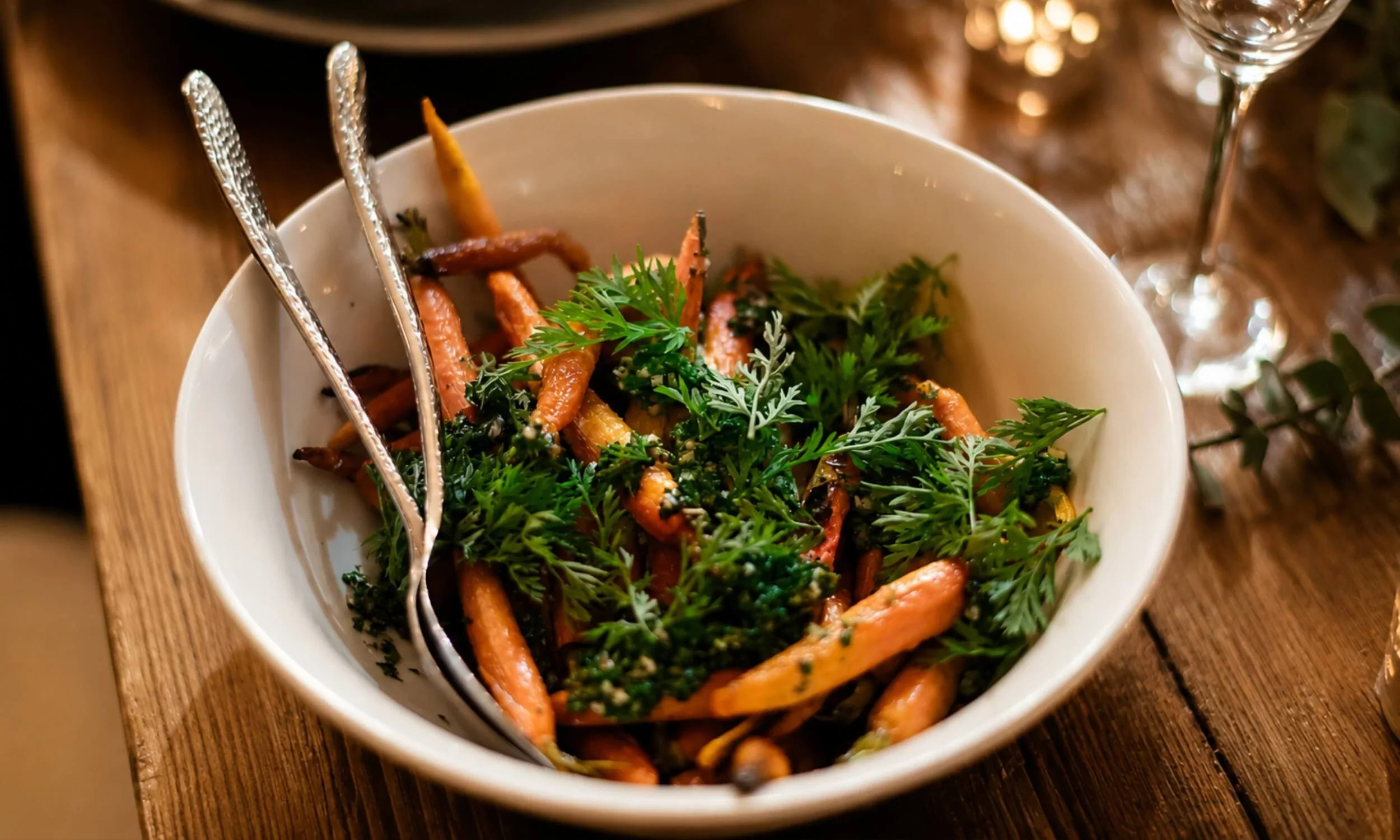
With plated dinner catering, guests remain seated while servers bring each course directly to the table. Of the types of catering services available for weddings, plated meals place particular demands on kitchen timing and coordinated service.
Several details determine how smoothly plated service works:
Course timing: Chefs need to finish many plates within a narrow window. Servers then need to move each course promptly from the kitchen to the tables.
Menu composition: Some dishes hold better during large-scale plating than others. The menu should account for preparation, finishing, and service time.
Meal selections: If guests choose entrées beforehand, the team needs accurate counts and seating information before service begins.
Dietary meals: Special meals need a clear identification system. Servers should know where each plate belongs without repeatedly questioning guests.
Distance to the tables: Longer service routes affect how quickly finished plates reach guests. The team may need additional staging or service points.
Event staffing: Captains, servers, and runners each support a different part of service. The right staffing plan keeps course releases organized.
Plated service works best when the menu, staffing, and timing develop together. When those pieces align, guests receive each course without seeing the coordination happening behind the scenes.
Family-Style Catering: How Shared Service Works
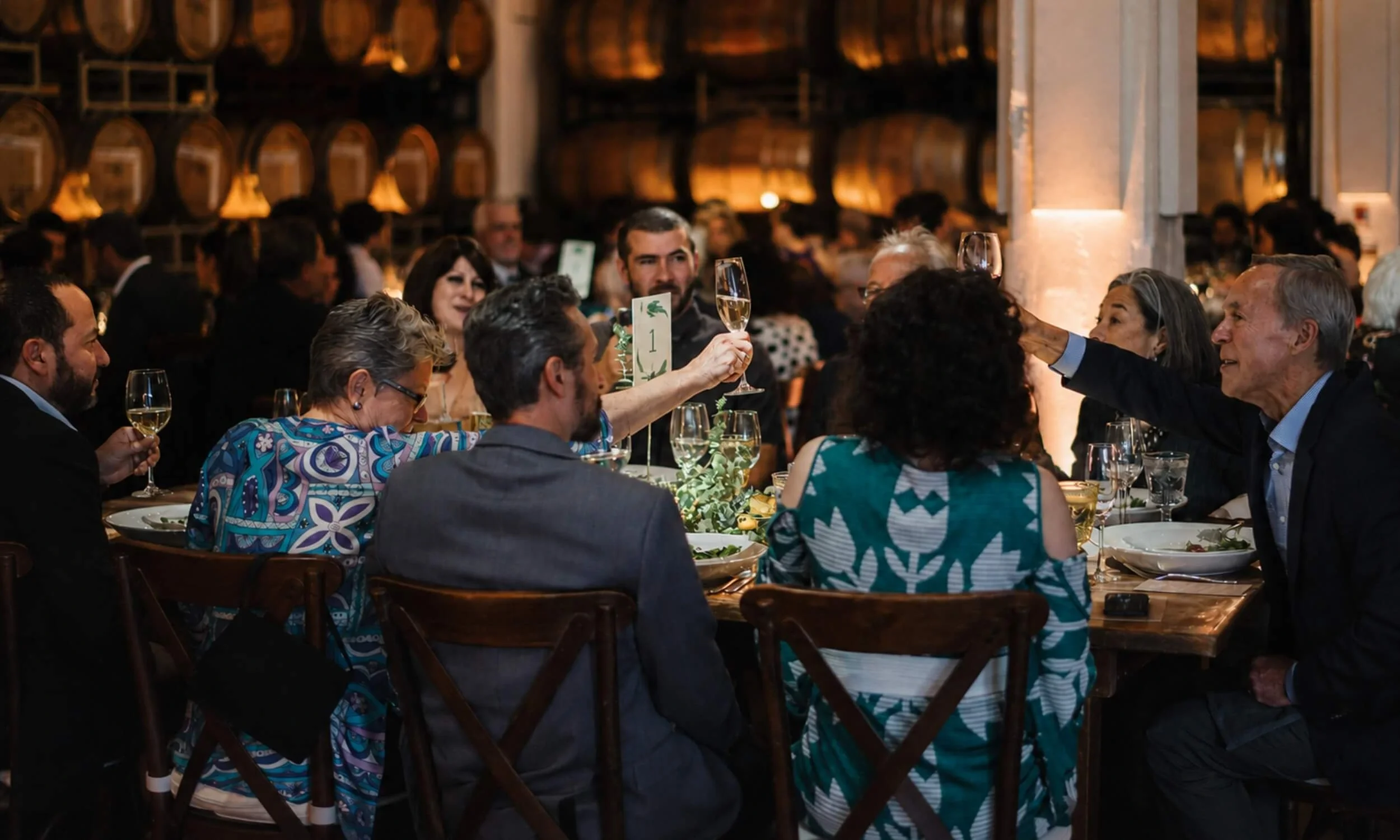
Family-style catering brings platters and bowls directly to each table for guests to share. Everyone stays seated while choosing portions and passing dishes around the group.
Shared serving changes what couples need to consider when weighing the types of catering services for dinner. The food, serving pieces, and table setup all need to work together.
Several details matter when planning the meal:
Available table space: Platters need room alongside plates, glassware, candles, flowers, and other tabletop pieces. Table dimensions should influence the serving plan.
Serving-piece size: Bowls and platters should hold enough food while remaining comfortable for guests to lift and pass.
Centerpiece placement: Floral arrangements should leave clear areas for food. Otherwise, servers may struggle to place dishes where everyone can reach them.
Dietary requirements: Guests with allergies or dietary restrictions may need separate dishes rather than food passed around the table.
Portioning: The kitchen needs to portion food for each table based on the number of guests seated there.
Replenishment: Servers should watch shared dishes and replace them when needed without repeatedly interrupting the meal.
Some foods lend themselves especially well to this style. Salads, vegetables, roasted mains, and sides can arrive together, giving guests several dishes to explore without leaving the table.
How to Choose Among Wedding Meal Service Options
Choosing between wedding meal service options becomes easier when you picture how dinner fits into the reception. Your schedule, guest list, menu, and table plan can narrow the types of catering services worth considering.
Before choosing, consider what will actually happen during the meal:
What happens during dinner? Speeches, toasts, performances, and other planned moments may work better with a more controlled service schedule.
Will guests choose entrées beforehand? Plated service often requires advance selections, while buffet and shared service handle choice differently.
How many dietary requirements are you managing? Allergies, vegetarian meals, and other needs may affect how the team prepares and identifies food.
Do you want guests leaving their tables? Some couples enjoy the movement of a buffet, while others prefer everyone to remain seated.
How important is the tabletop design? Family-style dishes need physical space, which may affect flowers, candles, glassware, and other table elements.
What does your guest list need? Older guests, young children, and people with mobility needs may influence how practical each approach feels.
When does dinner need to finish? Photography, dancing, entertainment, and venue timing may place firm boundaries around meal service.
You do not need to make these decisions separately. A caterer can review the full reception plan and recommend a service style that supports the menu, guests, and schedule.
“Start Planning Your Wedding Feast
Your menu and service style should fit the celebration you have in mind. Share a few details with us, and we can explore the possibilities and prepare a quote based on your plans.”
How the Venue Can Influence Your Catering Style
Your preferred meal service may look different once you consider the venue. Kitchen distance, staging space, and service routes may narrow the types of catering services that work comfortably on a property.
Kitchen location is one of the first things to check. If chefs finish food far from dinner, staff need a reliable route between both spaces.
Staging space matters, too. Servers need places for trays, service pieces, clearing, and course preparation without repeatedly crossing through guest areas.
For outdoor events, the property brings additional questions. Uneven paths, stairs, changing weather, limited power, and indoor-outdoor transitions may all affect the service plan.
These details become especially relevant when planning an event in Woodside, where celebrations often take place on private properties and outdoor settings. Walking the property helps the team understand distances, access points, and workable service areas before the event.
The venue does not need to dictate dinner. Understanding the property early helps the team choose a service approach they can execute well onsite.
Can You Combine More Than One Catering Service Style?
Yes. You can choose from several types of catering services within the same wedding rather than using one approach from start to finish.
For example, servers might pass small bites during cocktails before guests sit down for a plated first course. Shared mains could follow once everyone settles around the tables.
Dessert offers another opportunity. After dinner, a station or interactive display gives guests something to visit as they begin mingling again.
This flexibility also gives a gourmet catering menu more room to work. Chefs can serve each dish in the way that best suits its preparation, portioning, and presentation.
However, mixing service styles should make the event easier to experience, not more complicated. Each approach may require different equipment, staffing, serving pieces, and setup.
The event schedule often provides the best guide. Passed food suits movement, seated service supports dinner, and stations work well once guests start circulating again.
“Tell Us What You’re Planning for the Table
Your guests, venue, menu, and plans for the evening all shape how dinner comes together. Start a conversation with our team to talk through the service approach and details that make sense for your wedding.”
How Culinary Eye Plans Wedding Catering Service
At Culinary Eye, we start by understanding the people, setting, and plans for the celebration. Those conversations help us create a personalized wedding menu that reflects what you want to share with your guests.
As the menu takes shape, we consider the types of catering services, venue, and how each dish should reach the table. Our wedding catering brings those details together with event design, from custom serving pieces to edible installations and interactive stations.
From there, we plan the practical details that make everything work onsite. Staffing, staging, fabrication, service routes, and finishing all need to support the food and the gathering.
Every decision comes back to the people at the wedding. We want the food, service, and setting to work together naturally throughout the celebration.
Frequently Asked Questions (FAQs)
What are the main types of catering services for weddings?
The main types of catering services for weddings are buffet, plated, and family-style. Buffet offers guest choice, plated service brings individual courses to the table, and family-style uses shared dishes.
Is buffet or plated catering better for a wedding?
Neither is better for every wedding. Buffet service offers more guest choice, while plated service provides a more structured meal with tableside service.
Is family-style catering good for weddings?
Yes, family-style catering works well for weddings that encourage conversation and sharing at the table. However, tables need enough space for platters, glassware, and décor.
Is buffet catering cheaper than plated catering?
Buffet catering is not always cheaper than plated service. Final costs depend on the menu, staffing, rentals, equipment, guest count, and venue requirements.
Can wedding guests choose different meals with plated catering?
Yes, plated catering can accommodate different entrée selections and dietary meals. Couples usually collect choices beforehand so the service team knows which plate goes to each guest.
Can you combine buffet and plated service at a wedding?
Yes, a wedding can combine buffet and plated service. For example, guests might receive a plated first course before visiting stations for the main meal or dessert.
How long does wedding dinner service usually take?
Wedding dinner timing depends on the guest count, number of courses, staffing plan, venue layout, and service style. The caterer should coordinate the meal with speeches, photography, entertainment, and venue deadlines.