
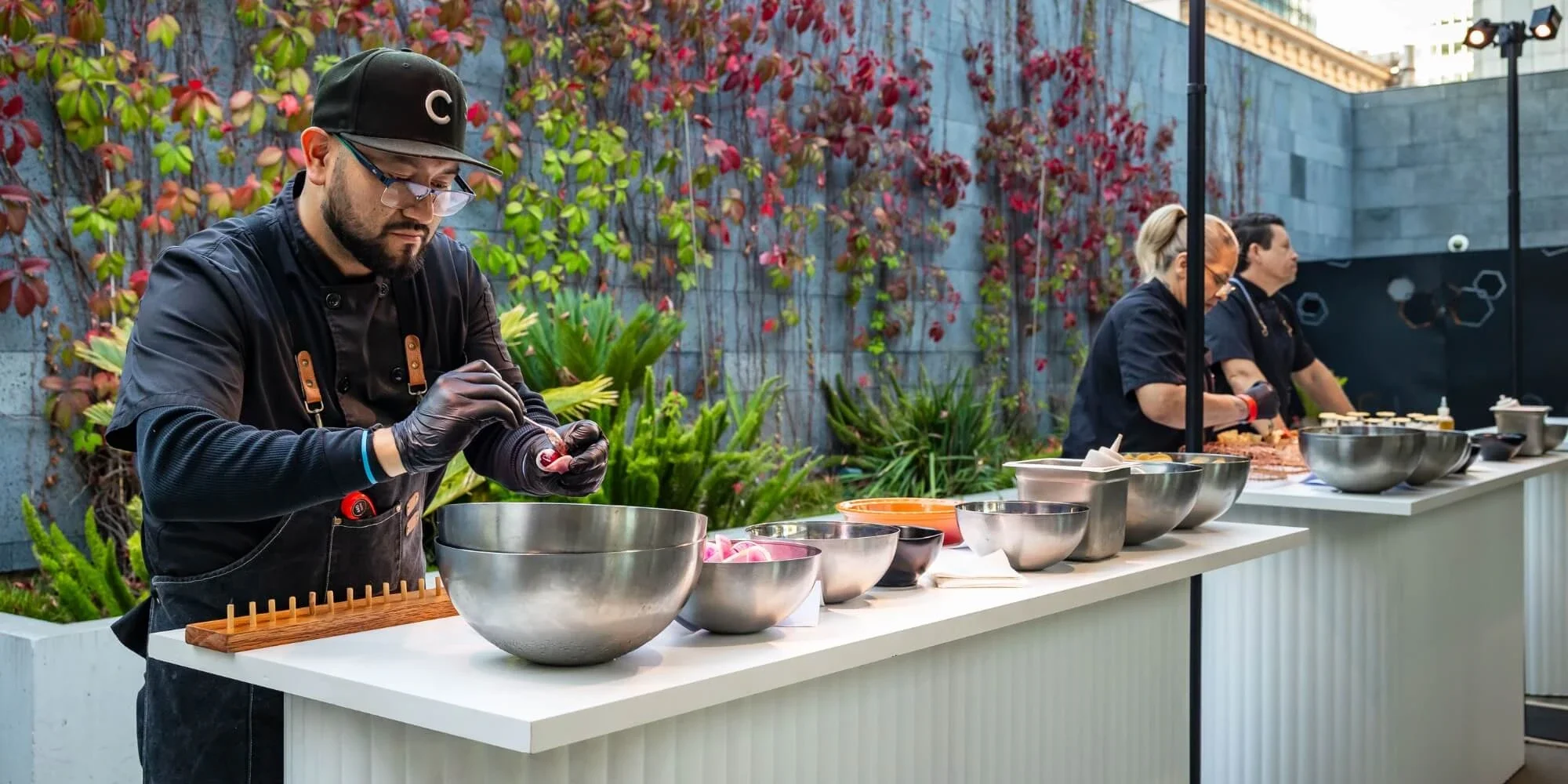
Some of the most interesting event spaces were never built with catering in mind. A private estate may have only a residential kitchen. A gallery might have a sink but no cooking area. Meanwhile, a garden may offer little more than power and water access. Catering without a commercial kitchen can still leave plenty of room for a considered menu. However, the culinary plan needs to respond to the property from the start.
At Culinary Eye, we consider the venue alongside the food, service, and guest experience. Our team evaluates what the property can support, then develops the menu, equipment plan, staffing, and service flow around those conditions.
Quick answer: Yes, catering without a commercial kitchen is possible when the venue offers suitable access to power, water, sanitation, cold storage, staging space, and vendor routes. Caterers can prepare some components off-site and create a temporary onsite kitchen with the equipment needed for cooking, finishing, holding, plating, and service.
Can You Cater at a Venue Without Kitchen Facilities?
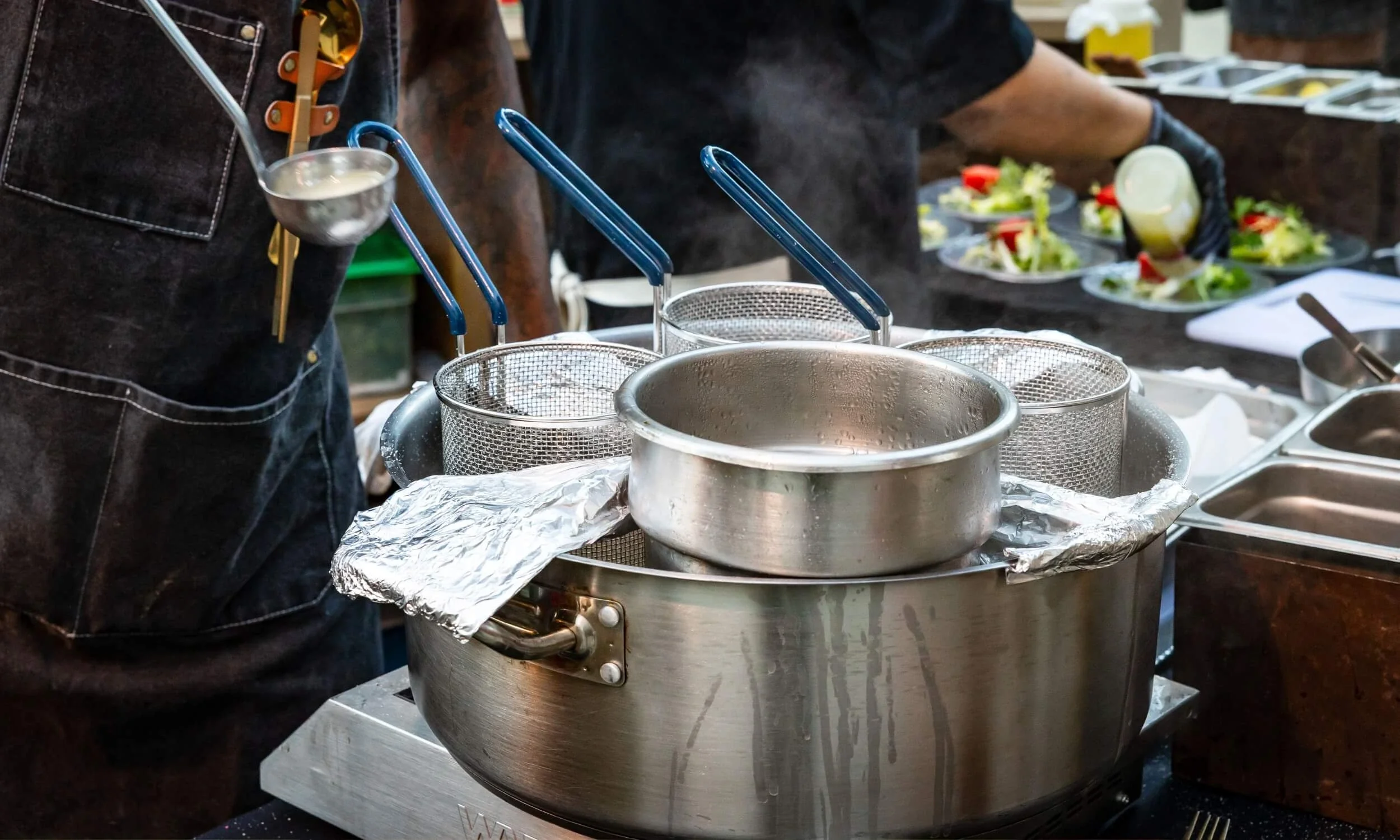
In many cases, yes. Catering without a commercial kitchen depends more on usable infrastructure than the presence of restaurant equipment.
A venue without kitchen facilities may have useful resources spread across the property. For example, one area might provide power while another offers water and protected staging space.
Before menu planning begins, the catering team should understand several basics:
Power: Check available circuits, outlet locations, and whether the property can support essential catering equipment.
Water: Confirm appropriate water access for handwashing, sanitation, preparation, and other necessary uses.
Cold storage: Determine whether the property has suitable refrigeration or space to accommodate additional cold storage.
Staging space: Identify protected areas that could accommodate essential back-of-house activity.
Vendor access: Make sure catering vehicles, equipment, and deliveries can reach appropriate areas of the property.
Cooking restrictions: Confirm any rules around heat, smoke, open flames, fuel, and cooking locations.
Waste handling: Identify where staff can manage food waste, recycling, trash, and used service pieces.
Service routes: Check whether staff have practical routes between back-of-house and guest areas.
This first assessment helps define what is possible before the menu takes shape. It can also uncover parts of the property that the catering team might use in unexpected ways.
Start With the Venue Before Planning the Menu
A menu can look perfect on paper and become difficult once it meets the property. Catering without a commercial kitchen starts with understanding how the venue actually works.
Photos rarely tell the whole story. A site visit can reveal narrow gates, long paths, stairs, gravel, poor lighting, or unexpected changes in elevation.
Distance can influence culinary choices, too. Food that travels well may suit a distant dining area better than dishes requiring immediate plating and service.
The walkthrough can also reveal spaces that were easy to overlook during early planning. Garages, side areas, and protected outdoor spaces may give the culinary team more options.
Guest movement matters as well. The locations of cocktails, dinner, entertainment, and other activities can help shape the right food and service format.
These considerations are especially useful when planning an event in Woodside, where private estates and outdoor properties can have distinctive layouts. Understanding the property early gives the culinary team more room to develop an approach that fits the setting.
Seeing the property firsthand can also lead to ideas that would never emerge from a floor plan. Sometimes the space itself suggests how guests should experience the food.
Build a Catering Kitchen Setup Around the Space
Once the team understands the property, it can decide where different culinary tasks should happen. Those functions may need to sit across several connected work areas when catering without a commercial kitchen.
A temporary catering kitchen setup should support the menu and the way chefs will work throughout service. It does not need to recreate a restaurant kitchen.
Depending on the event, the setup may include:
Receiving and storage: Staff need a designated place to check deliveries, organize ingredients, and keep supplies protected.
Cold holding: Refrigerated food needs a suitable holding area until chefs are ready to use it.
Preparation and finishing: Chefs need stable work surfaces for assembly, portioning, garnishing, and onsite cooking.
Hot holding: Finished dishes may need a designated holding area before they move into plating or service.
Plating: A dedicated area gives chefs room to assemble dishes and hand completed plates into service.
Sanitation: Handwashing and cleaning areas should sit where staff can access them throughout production.
Waste collection: Separate waste areas keep food scraps, recycling, trash, and used items away from active workspaces.
How these areas connect matters as much as their size. Chefs should be able to move between tasks without repeatedly crossing service routes or crowded work areas.
“Have a Venue in Mind?
Every property brings different needs, from equipment and staffing to the way food moves through the space. Tell us a little about your plans, and we can put together a quote based on what your event actually needs.”
Choose a Menu That Works With the Venue
The venue should inform the menu without unnecessarily limiting it. Gourmet catering can still offer variety when chefs consider what each dish will require onsite.
Chefs planning catering without a commercial kitchen can then balance those requirements with the conditions available at the venue.
The amount of finishing a dish requires is one consideration. A composed plate may need several last-minute steps, while another dish may need only a final garnish.
Service style matters, too. Passed bites need to work comfortably on trays, while family-style dishes need portions and serving pieces that guests can share easily.
The same principle applies to interactive food. Chef-attended stations can bring cooking or finishing closer to guests when the venue supports that format.
Menu variety also deserves attention. Several dishes that all demand last-minute finishing can create pressure in a temporary workspace, even when each works well individually.
That does not mean choosing simpler food. Instead, chefs can balance dishes with different finishing needs so the menu remains interesting and workable.
Plan Food Preparation, Transport, and Temperature Control
Not every stage of production needs to happen at the venue. Catering without a commercial kitchen allows chefs to separate off-site preparation from work that benefits from happening closer to service.
Some components may arrive ready for assembly, while others need reheating, cooking, garnishing, or plating onsite. Those decisions help determine how each component should be packed and transported.
Transport then becomes part of the production plan. Travel time, loading order, containers, and delivery schedules can all affect the condition of food on arrival.
Once onsite, the team needs to maintain required temperatures until each component enters its next stage. Different dishes may also need different holding times before chefs finish or plate them.
When storage space is limited, staggered deliveries can keep ingredients and supplies from crowding the working areas.
For larger menus, chefs can also organize food into batches based on when guests will receive it. That gives the team better control over temperature, texture, and final presentation.
Match Equipment to the Menu and Service Style
The menu should determine the equipment list, not the other way around. Every additional piece takes up working space and adds another consideration during setup.
Once chefs know what they will prepare onsite, they can match equipment to each stage of production and service.
Depending on the menu and event format, that may include:
Refrigeration: Portable refrigeration or cold-holding equipment may be needed when the venue cannot provide enough capacity.
Hot holding: The menu and service schedule determine how much holding capacity the team needs before food reaches guests.
Preparation: Worktables, shelving, containers, racks, and small tools support the specific preparation planned onsite.
Cooking: Portable cooking equipment may be necessary when dishes require onsite heat and the property permits its use.
Sanitation: Handwashing and cleaning equipment can supplement the facilities already available at the venue.
Service: Carts, trays, plate racks, and station equipment can support the chosen dining format and distances across the property.
The equipment list becomes especially important when catering without a commercial kitchen requires chefs to create their working environment from the available space.
Outdoor catering equipment may also need to account for wind, rain, heat, uneven ground, and limited power access. Those conditions can affect both equipment choice and placement.
A focused equipment list can shorten setup and make last-minute adjustments easier when venue conditions change.
Plan Staffing and Service Flow Around the Temporary Kitchen
Event staffing needs can change considerably when the culinary team works away from the guest areas. The distance between preparation and service becomes particularly important with catering without a commercial kitchen.
Consider a plated dinner on a large estate. A long route between the kitchen and tables can affect how quickly completed plates reach guests. In that situation, additional runners may support the service team. A secondary staging point can also shorten the final trip to the dining area.
Interactive food formats create different staffing needs. A chef running a station may cook, finish dishes, speak with guests, and monitor replenishment.
Captains become particularly useful when teams work across separate areas. They can coordinate timing between chefs, servers, bartenders, and event production.
Staff placement can also change as the event progresses. A team may need more support during dinner service, then shift people as guests move elsewhere.
Coordinate Venue Rules, Rentals, and Vendor Logistics Early
A temporary culinary operation rarely exists by itself. The caterer, venue, planner, rental company, and production teams often depend on one another during setup.
Those relationships become more important when catering without a commercial kitchen requires additional equipment, temporary work areas, or supporting infrastructure.
Important details include:
Delivery windows: Stagger food, rentals, equipment, and supplies so several vendors do not compete for the same loading area.
Rental timing: Refrigeration, worktables, tents, lighting, and service pieces may need to arrive before culinary setup can begin.
Shared access: Coordinate loading areas, gates, elevators, pathways, or service entrances when several teams need them.
Power allocation: Confirm which vendors need power, where they will connect, and whether their equipment can operate simultaneously.
Venue restrictions: Share rules around cooking, heat, fuel, noise, or protected areas with every vendor they affect.
Setup sequence: Identify which installations must happen first so one team does not prevent another from starting.
Breakdown timing: Coordinate equipment removal, cleanup, rental collection, and property access after guests leave.
Vendor parking: Plan where staff and production vehicles will go once unloading finishes.
A shared production schedule can make these connections visible before event day. For example, culinary setup may depend on rental tables arriving before the chefs begin their work.
Create a Backup Plan Before Event Day
Even a detailed event schedule can change once guests arrive. Weather can shift, deliveries can run late, or a ceremony can take longer than planned. A useful backup plan focuses on the disruptions most likely to affect food and service.
Those contingencies may include:
Weather or layout changes: Identify protected alternatives when rain, heat, or wind affects preparation areas, stations, or guest spaces.
Power interruptions: Know which equipment needs continuous power and what backup options can support essential functions.
Access delays: Allow enough time for traffic, gate access, property restrictions, or late rental deliveries.
Equipment problems: Identify alternatives for essential refrigeration, cooking, holding, or service equipment.
Schedule changes: Decide how chefs will adjust when ceremonies, speeches, photography, or other programming runs longer than expected.
Contingency planning becomes especially useful with catering without a commercial kitchen because the team has built the operation around that particular property.
The plan should also identify who has authority to make changes onsite. That person can respond quickly without waiting for several vendors to reach an agreement.
“Planning Around an Unusual Space?
A garden, private home, gallery, or open property can ask for a different approach to food and service. We can look at the space with you and talk through what could work there.”
What to Ask a Caterer About a Venue Without a Commercial Kitchen
Experience in unconventional venues can be difficult to judge from menus and event photos alone. The conversation with a caterer can tell you much more about how they work.
Ask about their process, not just whether they have handled a similar property before. The decisions involved in catering without a commercial kitchen often develop as the team learns more about the space.
Useful questions include:
Have you worked in properties similar to mine? Ask what challenges those spaces presented and how the team responded.
What happens after the site visit? Look for a clear process for turning observations into culinary, staffing, rental, and production decisions.
What will you need from me or the venue? A caterer should explain responsibilities early rather than introduce unexpected requirements close to the event.
Which parts of the setup will your team manage? Clarify responsibility for rentals, temporary work areas, equipment, sanitation, and other catering needs.
What decisions need to be made first? The answer can reveal whether the team understands which choices affect everything that follows.
How do you communicate changes before the event? Ask who will keep you, the venue, and other vendors informed as plans develop.
Who leads the catering operation onsite? You should know who makes culinary and service decisions once setup and guest arrival begin.
Also notice what the caterer asks about your event. Questions about the guests, pace, atmosphere, property, and priorities can reveal whether they build around your plans or apply a familiar template.
How Culinary Eye Builds Food Experiences in Unconventional Spaces

At Culinary Eye, we look beyond where the food will be prepared. We consider how guests will move through the space and experience the food within it.
That connection between food and event design might lead to chef-led stations on an open lawn or an edible installation shaped around a gallery. For brand events, we can carry visual identity into the food, custom builds, and interactive elements. Personal celebrations may draw from familiar flavors, family references, or traditions.
Catering without a commercial kitchen can become part of that creative process. The character and layout of the property may suggest ways to present, finish, or share the food.
Frequently Asked Questions (FAQs)
Do caterers bring their own cooking equipment?
Many full-service caterers bring equipment based on the menu and venue. This may include portable cooking equipment, refrigeration, hot holding, worktables, sanitation stations, and service equipment. The exact list depends on the property, guest count, menu, and available utilities. Ask what the venue must provide before finalizing your catering plans.
What facilities does a caterer need at a venue?
Caterers commonly need access to power, water, food storage, preparation space, sanitation facilities, and suitable loading access. Exact requirements depend on the menu and service style. A caterer should assess these needs before finalizing the event plan.
Can you have catering at an outdoor venue?
Yes. Outdoor venues can support full-service catering with suitable preparation, storage, power, sanitation, weather protection, and service areas. The catering team should also consider wind, temperature, terrain, guest movement, and the distance between culinary and dining areas.
How do caterers keep food hot at an event?
Caterers use suitable hot-holding equipment to maintain required food temperatures before service. The exact equipment depends on the dish, venue, and service schedule. Teams also coordinate cooking, transport, finishing, and plating times. This can reduce unnecessary holding and help protect texture and quality.
How do caterers keep food cold at outdoor events?
Caterers use refrigeration and cold-holding equipment to keep perishable food within required temperature ranges. They may also schedule deliveries and move ingredients into production only when needed. Outdoor temperature and event duration influence the cold-storage plan.