
Conference Planning Checklist: Catering Details You Cannot Miss

When hundreds of attendees leave a keynote at once, catering decisions made weeks earlier suddenly become visible. A strong conference planning checklist helps make sure the food, timing, and setup are ready for that moment.
AI conferences and tech summits add another layer of complexity. Demos, workshops, meetings, networking, and changing schedules all influence how catering needs to work throughout the day.
At Culinary Eye, we account for those moving parts when catering for AI conferences and tech summits in San Francisco. We plan food around the event itself, from morning arrivals through the final gathering.
This conference planning checklist covers the details worth sorting out before the doors open.
1. Start With the Conference Format, Guest Count, and Scope
Before choosing dishes, understand the event the catering team needs to support. A 150-person developer summit works differently from a multi-day AI conference spread across several stages.
Start your conference planning checklist with the details that define the food program. These early decisions shape menu development, quantities, equipment, staffing, and the overall scale of service.
Gather these details first:
Expected attendance: Use current registration numbers while accounting for likely changes as the conference approaches.
People outside registration: Count speakers, event staff, production crews, security teams, vendors, and others who also need meals.
Event duration: Establish whether catering covers one meal, a full day, several days, or evening programming as well.
Program format: Identify keynotes, panels, workshops, demos, breakout sessions, and other major parts of the conference.
Space usage: Determine whether attendees stay together or split between stages, meeting rooms, demo areas, and activations.
Daily attendance: For multi-day events, estimate each day separately. Opening days, closing sessions, and evening events may draw different numbers.
Together, these details establish the conference catering requirements before menu development begins. They give the catering team enough information to build the right plan.
2. Build a Catering Checklist for Event Planners Around Guest Flow
When hundreds of people leave a keynote at once, a poorly placed food station quickly creates a line. Planners need to consider how attendees will approach, use, and leave each catering area.
Guest movement belongs on the conference planning checklist because placement affects both access and service speed. Before choosing station locations, walk through the venue as an attendee would.
Consider these questions:
Where do people first arrive? Keep catering lines clear of registration desks, security checkpoints, coat checks, and main entrances.
How do major sessions release? Several service points may handle a large crowd better than one central station.
Where will people stop to talk? Allow room around food stations so conversations do not block attendees collecting food.
How much time do breaks allow? A 15-minute coffee break requires quicker access than a longer lunch period.
How will people move between sessions? Keep stations clear of doorways, stairs, elevators, and main routes between conference spaces.
What will attendees have in their hands? Laptops, phones, badges, notebooks, and tote bags make complicated dishes harder to manage.
Add one final test to your conference planning checklist: picture the busiest five minutes of the event. Estimate how many attendees may arrive at once and how quickly each station can serve them. The exercise may reveal a need for another service point, more table space, or a different layout.
3. Approach Conference Food Planning With Dietary Needs in Mind

A conference menu needs to work for more than the majority of the room. Dietary restrictions, allergies, and personal food choices deserve consideration before the menu reaches its final stage.
Add dietary information to the conference planning checklist early enough for the culinary team to develop complete alternatives. Late requests leave fewer options and make careful preparation more difficult.
A few details deserve particular attention:
Collect dietary information during registration: Give attendees a clear way to report allergies, intolerances, religious dietary needs, and other restrictions.
Look at the numbers before building alternatives: Several guests may share the same requirement, making a broadly suitable dish more practical than individual substitutions.
Create complete plant-based dishes: Build them as part of the menu rather than removing ingredients from another dish at the last minute.
Identify major allergens clearly: Make relevant information easy to find so attendees do not have to guess what a dish contains.
Discuss cross-contact procedures: Ask how the kitchen prepares, stores, transports, and serves food for guests with serious allergies.
Brief the service team: Staff should know what each dish contains and whom to ask when they cannot answer a dietary question confidently.
Before signing off on the menu, add a full dietary review to your conference planning checklist. Look at each option as a complete meal, not an isolated substitution. This helps catch gaps for guests avoiding dairy, gluten, animal products, or other ingredients.
4. Match the Service Style to Each Part of the Conference
Breakfast, lunch, and an afternoon break ask different things from catering. The right format depends on how people will eat during each part of the event.
Your conference planning checklist should consider service style for each meal period separately. Convenience may matter most at breakfast, while lunch gives planners more room to create a fuller meal.
For morning arrivals, self-serve breakfast stations work well when guests arrive gradually. They also let people choose what they want without committing to a formal meal.
For shorter breaks, individually portioned snacks and grab-and-go items keep service simple. Guests can choose something quickly and carry it back to a meeting or conversation.
Lunch opens up more options. Buffets offer broad choice, while composed stations give the culinary team more control over presentation and portions. Boxed meals suit programs where attendees need to take food elsewhere.
Interactive stations serve a different purpose. A chef-finished dish or participatory element gives guests a reason to spend more time with the food. These formats make the most sense when the event gives people room to engage.
An experienced conference catering team can also combine formats across the day instead of choosing one approach for the entire event. That flexibility lets each meal do its job without making breakfast, lunch, and breaks feel interchangeable.
5. Plan Food and Beverage Quantities Without Guessing
A final headcount does not automatically tell you how much food to order. Attendance gives you a baseline, but actual consumption varies across meals, snacks, coffee, and receptions.
Use the conference planning checklist to estimate each service period on its own. A breakfast station, seated lunch, afternoon snack, and evening reception will not follow the same consumption pattern.
Consider these factors:
Meal participation: Estimate how many attendees will actually join each meal. Offsite meetings, nearby restaurants, and sponsor events may reduce participation.
Menu composition: A menu with several substantial choices needs different quantities than one built around lighter snacks and small bites.
Portion structure: Decide whether guests receive fixed portions or choose freely from a buffet or station.
Service duration: Longer open service periods may require staged replenishment rather than putting the full quantity out at once.
Coffee and water: Estimate beverages separately from meals. Demand often continues between scheduled food periods.
Reception consumption: Passed bites, stationary food, and beverages require their own estimates because guests eat differently while networking.
Multi-day adjustments: When possible, review what remains after the first day and use that information to fine-tune later quantities.
Ask the catering team where a buffer makes sense and where precise portions work better. This helps control food and labor costs while reducing both shortages and unnecessary waste.
“Get a Clearer Picture of Your Catering Costs
Every conference brings a different guest count, menu, venue, and service plan. Tell us what you’re planning, and we can help you understand what those choices mean for your catering budget.”
6. Review the Venue Before You Finalize the Catering Plan
A beautiful event space may have one freight elevator, limited refrigeration, or no usable kitchen. Those details can change what the catering team prepares onsite and what needs to arrive ready for service.
Add a back-of-house review to your conference planning checklist before finalizing the catering plan. The venue’s infrastructure will shape equipment needs, preparation methods, staffing, and setup.
Review these operational details:
Loading access: Confirm delivery windows, loading zones, parking restrictions, security procedures, and the distance from vehicles to the building.
Kitchen facilities: Check available ovens, sinks, refrigeration, preparation surfaces, ventilation, and dishwashing capacity.
Electrical supply: Identify suitable power sources for coffee equipment, warming units, refrigeration, lighting, and specialty stations.
Back-of-house space: Find areas for staging food, beverages, rentals, packaging, and equipment before they enter guest-facing spaces.
Freight and elevator access: Check elevator dimensions, weight limits, operating hours, and vendor access for events across multiple floors.
Water access: Locate usable water sources for beverage service, food preparation, cleaning, and handwashing.
Waste procedures: Establish where staff will sort, hold, and remove waste throughout the event.
Venue restrictions: Review fire regulations, insurance requirements, alcohol policies, cooking limitations, noise rules, and cleanup deadlines.
When considering San Francisco venues, arrange a walkthrough with the caterer whenever possible. A site visit often reveals access or equipment needs that floor plans and venue specifications do not show.
7. Plan Catering Around the Conference Schedule
A keynote that runs 15 minutes late does more than shift the next session. Lunch may already be hot, coffee may be poured, and staff may be waiting to open stations.
Use the conference planning checklist to connect catering milestones with the main event run of show. Production and catering leads should work from the same schedule and know which moments require coordination.
Include these timing points:
Catering team call time: Set enough time for preparation, setup, equipment checks, and a team briefing before service begins.
Doors opening: Identify which breakfast, coffee, or beverage stations need to be ready when the first attendees arrive.
Session releases: Have food ready before major rooms empty, especially when large groups break at the same time.
Meal start times: Give catering and production leads a clear cue for opening lunch or another major meal period.
Replenishment windows: Schedule checks before each expected rush so stations remain stocked throughout service.
Program changes: Name the person responsible for telling the catering lead about delays, extensions, or early session endings.
Clearing times: Set cleanup periods around live sessions, recordings, interviews, and other active programming.
Service transitions: Allow enough time to reset a breakfast, lunch, or snack area before its next use.
A detailed conference catering checklist should also identify which timings have flexibility and which do not. That distinction helps the team decide whether to hold food, shift staff, or adjust service when the program changes.
8. Plan Staffing Around Service and Guest Interaction
Two conferences with the same guest count may need very different staffing. A self-serve breakfast requires less hands-on service than a lunch with chef-attended stations.
Instead of using headcount alone, add each service role to the conference planning checklist. Consider what needs to happen before, during, and after every meal period.
For example, the team may include servers, station attendants, culinary staff, bussers, bartenders, captains, and back-of-house support. Each role covers a different part of the food experience.
Interactive stations require particular attention. A chef may finish dishes in front of guests, while another team member resets ingredients and serving pieces behind the station.
Large conferences may also need separate teams for different floors, rooms, or meal areas. In those cases, assigning a captain to each area gives staff a clear point of contact.
The style of service matters as well. Passed food requires enough servers to circulate consistently, while buffets need people focused on maintenance and clearing.
When discussing event staffing, ask how the caterer calculates coverage for each service format. That conversation often reveals labor needs that a simple staff-to-guest ratio misses.
9. Think Beyond Lunch: Receptions, Bars, and Networking
The last panel does not always mark the end of a tech conference. Many events continue with founder gatherings, sponsor receptions, product showcases, or broader networking.
Treat the evening program as its own phase in the conference planning checklist. Attendee numbers, beverage needs, staffing, and the use of the space may all change after daytime sessions end.
Start by confirming who the reception is for. Some events remain open to all attendees, while others shift to invited guests, speakers, sponsors, or company teams.
Beverages also need a separate plan. When arranging bar service, consider expected attendance, service hours, nonalcoholic options, venue policies, glassware, ice, and the number of service points.
Next, decide whether the daytime catering setup stays in place. A reception may use different rooms, furniture, lighting, or branded elements, which could require a reset between programs.
Finally, account for guests who arrive only for the evening. Registration, access, coat storage, and beverage demand may change when a second audience joins the event.
Ask the venue, production team, and caterer how much reset time they need between programs. Building that window into the schedule prevents the reception setup from competing with the final conference session.
“Let’s Talk About What You’re Planning
We’re happy to hear what you have in mind and work through the details with you. Share your conference plans, and we can shape the catering around your people, space, and program.”
10. Make Food Part of the Conference Experience
Conference food does not always need to sit apart from the ideas shaping the event. A menu, station, or installation can reference the subject without turning lunch into another branded display.
Include that possibility in the conference planning checklist when the conference has a strong creative direction. Start with the event concept, then decide whether food has a meaningful role within it.
For example, an edible installation might translate part of the theme into ingredients, form, or presentation. An interactive station could invite guests to participate in a way that connects directly with the program.
Brand identity offers another starting point. Colors, materials, packaging, serving pieces, and custom fabrication can carry recognizable details without relying on logos alone.
This approach also works well for corporate catering when a company wants the food to feel specific to its event. The culinary team can draw from the audience, subject, brand, or purpose when developing the experience.
Beyond the food itself, event design can connect catering with furniture, signage, lighting, and the surrounding environment. Considering those elements together keeps the food and physical environment visually connected.
Not every conference needs a custom installation or interactive moment. First ask what the idea adds for the guest. If the answer is only decoration, the food may be stronger without it.
Final Conference Planning Guide for Event Day
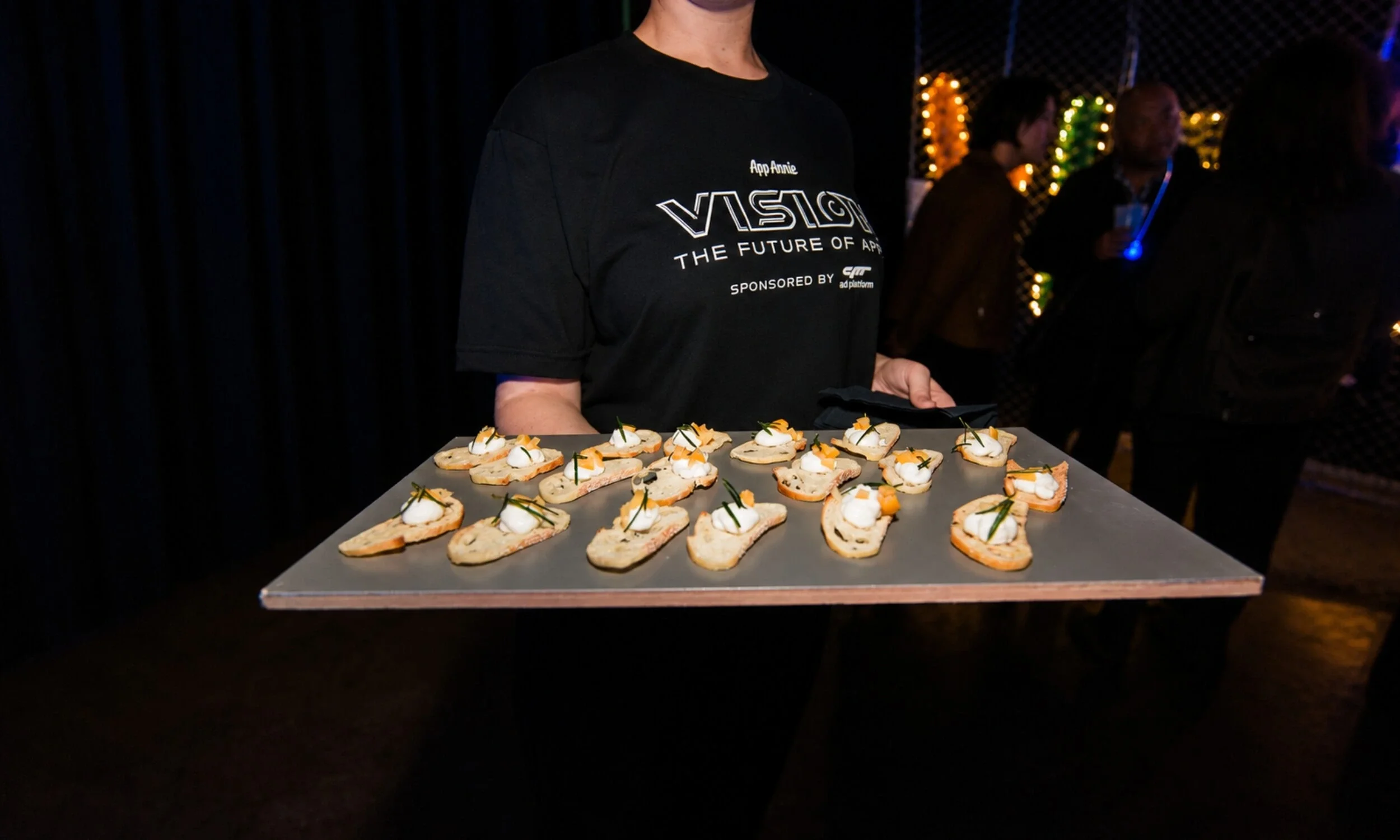
The major catering decisions should be settled by now. The final review is about making sure those decisions are documented, shared, and ready for event day.
Use the conference planning checklist to close any remaining gaps between the planner, caterer, venue, and production team. Before event day, confirm:
Final numbers are locked: Make sure the caterer has the guaranteed headcount, including meals for speakers, staff, vendors, and production teams.
Dietary requests have reached the right people: Confirm the culinary and service leads have the final allergy and dietary information.
Everyone has the latest schedule: Send one current version rather than relying on different copies shared throughout the planning process.
Vendor instructions are complete: Provide final arrival times, loading directions, parking details, security procedures, and onsite access information.
Rentals and equipment are accounted for: Confirm what the caterer provides, what the venue supplies, and what arrives from outside vendors.
Key contacts are identified: Name the decision-maker for catering, venue operations, production, and overall event management.
Last-minute changes have a clear path: Decide who approves updates to timing, headcount, dietary needs, or service before they reach the catering team.
End-of-event responsibilities are assigned: Confirm who handles rentals, leftover food, waste, equipment, and final venue sign-off.
A corporate event planning checklist may involve dozens of teams, so keep the final catering information in one accessible place. A shared document or event brief gives key contacts one reliable source on event day. Then set a cutoff for nonessential changes. Protecting the final plan gives the culinary, service, and production teams time to prepare against the same information.
Planning an AI Conference or Tech Summit in San Francisco?
A detailed conference planning checklist gives you the pieces. Culinary Eye brings them together through a culinary approach shaped around each conference, its setting, and the people attending.
Our work goes beyond a standard catering setup. We develop menus, edible installations, interactive food experiences, and custom builds that connect with the event around them. Just as importantly, our team handles the practical work required to bring those ideas into the room.
That approach shapes our conference catering in the Bay Area. We create food experiences that give people a welcome break from the screen and something worth sharing around the table.
Frequently Asked Questions (FAQs)
How far in advance should you book catering for a conference?
Book conference catering as soon as you confirm the event date and venue. For larger conferences, starting several months ahead gives you more time for menu development, staffing, rentals, and venue coordination. Smaller events may need less lead time. However, popular dates and complex food experiences often require earlier planning.
What affects the cost of conference catering?
Conference catering costs depend on the menu, guest count, service style, staffing, rentals, venue requirements, and event duration. A simple breakfast or boxed lunch generally requires fewer resources than chef-attended stations or a reception. Request pricing based on the complete event schedule so the estimate accounts for food, labor, equipment, and other service needs.
How much food should you order for a conference?
Order food based on expected meal participation, not registration numbers alone. Include attendees, speakers, staff, vendors, and production teams who need meals. Then account for the type of service, portion sizes, event duration, and nearby dining options. Your caterer can recommend appropriate quantities and buffers for each meal period.
What food works best for a conference lunch?
The best conference lunches are satisfying, easy to serve, and practical for the way attendees will eat. Buffets and composed stations offer variety, while boxed meals work well when guests need portability. Include complete vegetarian or plant-based choices, clearly identify dietary options, and avoid dishes that become difficult to eat in the available setting.
How do you accommodate dietary restrictions at a large event?
Collect dietary restrictions during registration and share final requirements with the caterer before menu approval. Plan complete alternatives for common needs rather than relying on last-minute substitutions. Clearly label dishes, establish procedures for serious allergies, and make sure service staff know where to direct guests who need additional ingredient information.
Does a conference venue need a kitchen for catering?
No, a conference venue does not always need a full commercial kitchen. Caterers can often prepare food offsite and use temporary preparation, warming, or finishing equipment at the venue. However, available power, water, refrigeration, ventilation, loading access, and local venue rules will determine what the catering team can safely prepare and serve onsite.