
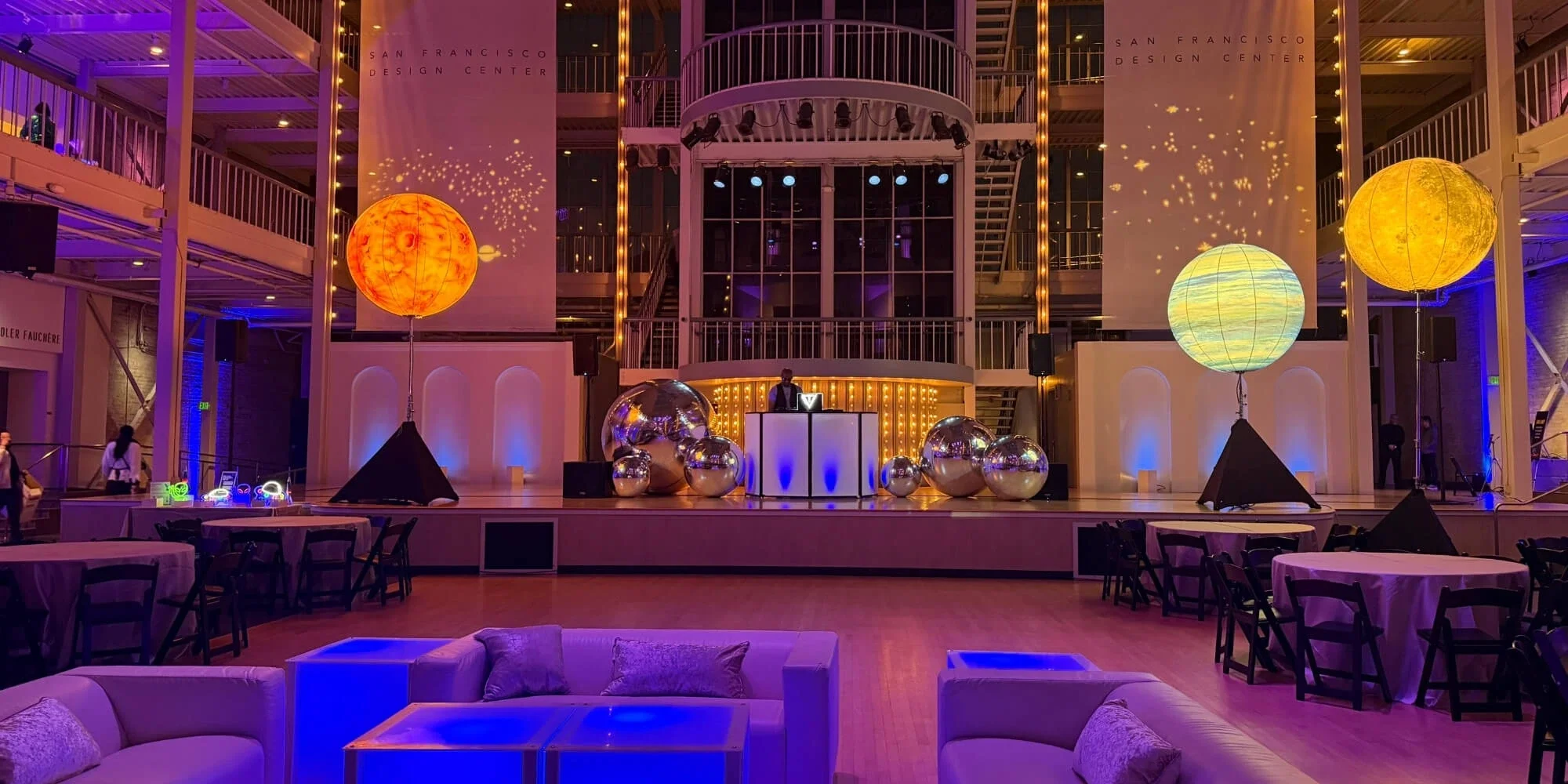
When you walk into a well-produced event, you notice a few things right away. The room feels alive. Music carries easily across the space. Lighting draws your eye toward a stage, a tasting station, or a chef plating something beautiful. Guests know where to gather and where to wander next. These details don't happen by chance. They're the result of careful planning, technical coordination, and thoughtful event production working together behind the scenes to shape the guest experience from beginning to end.
At Culinary Eye, production planning begins alongside the culinary concept, so food, design, lighting, layout, and guest flow feel connected from the start. The team's event design services help shape environments where food, people, and movement naturally come together. Lighting, layout, and technical systems quietly support those interactions so the evening unfolds comfortably for everyone in the room.
What Is Event Production?
Event production brings together the technical, creative, and logistical elements that allow an event to run smoothly. Rather than treating lighting, audio, staging, and design as separate pieces, a production team coordinates them into one cohesive experience from setup through execution. It begins long before guests arrive and continues until the final piece of equipment has been packed away.
A production team may coordinate several key elements:
Lighting design and rigging: Lighting helps guide attention across the room. It highlights stages, installations, and dining areas as the event unfolds.
Audio systems and microphones: Clear sound allows every guest to hear speeches, music, and announcements without distraction.
Video screens and projection systems: Screens support presentations, visual storytelling, and brand moments during the program.
Stage platforms and scenic structures: Stages create natural gathering points when a speech begins or entertainment takes the floor.
Power planning across the venue: Electrical systems support lighting, sound equipment, and production installations.
Program cue coordination: Lighting, sound, and visuals follow a detailed timeline during the event.
Together, these elements create an environment where every part of the event works together seamlessly.
What Does Event Production Include?
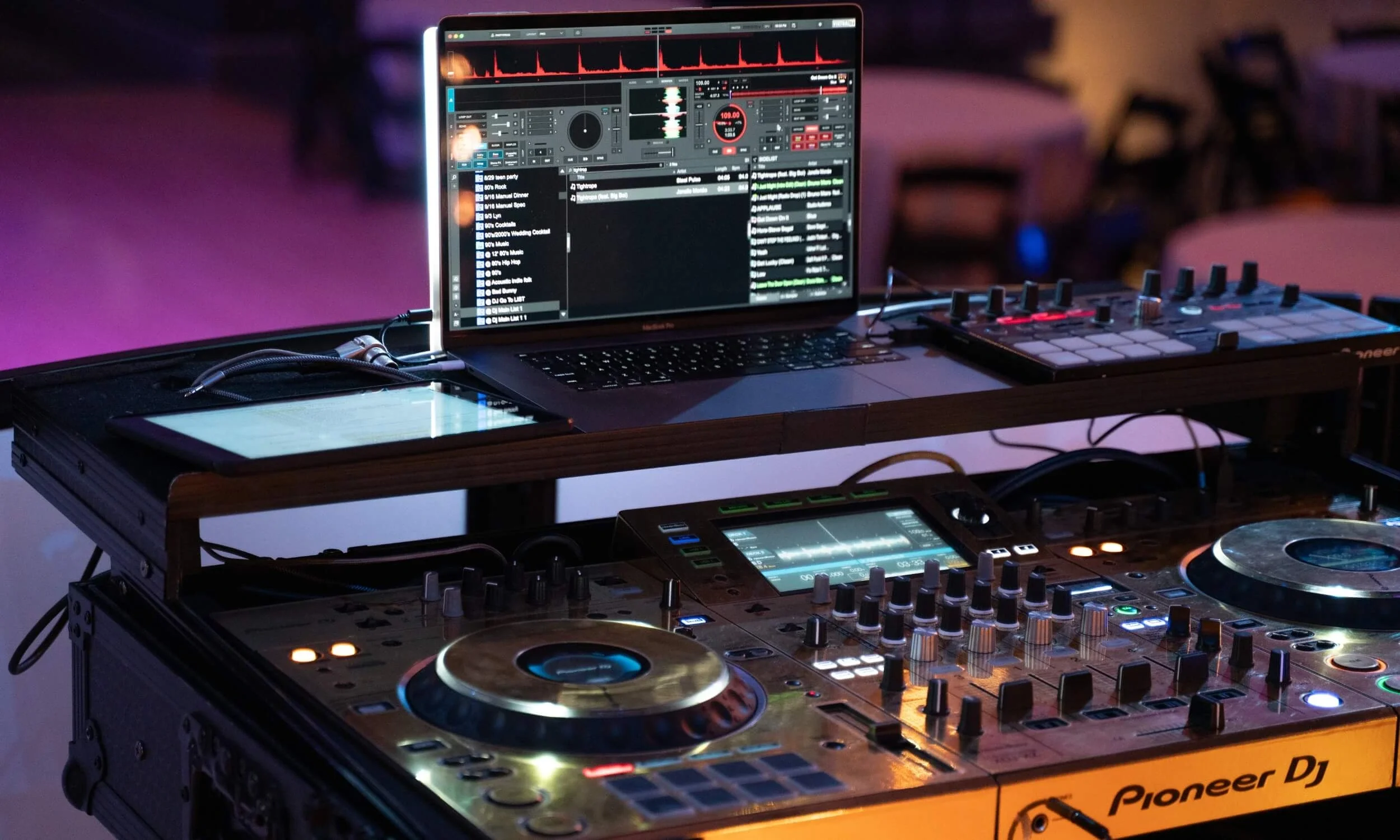
Event production can include lighting, AV, staging, scenic design, technical staffing, power planning, vendor coordination, cue management, setup, live operation, and teardown. For events with food and hospitality, production may also support chef stations, tasting areas, service timing, guest flow, and the overall atmosphere of the room.
“Wondering What an Experiential Event Might Cost?
Event production often brings together food, design, and technical planning. Pricing naturally depends on the space, guest count, and the type of experience you’re imagining. If you’d like a clearer idea of what your event might involve, you can reach out and request an estimate.”
The Technical Systems Behind Event Production
Behind every successful event is a network of technical systems supporting what guests see, hear, and experience throughout the program. Lighting, audio, video, and power distribution support everything guests see, hear, and experience throughout the event.
Common systems often include:
Lighting systems: Lighting defines different areas of the venue and guides attention during key moments.
Sound systems: Microphones and speakers allow guests across the room to hear clearly.
Video displays and projection: Screens display presentations, videos, or visual elements tied to the event theme.
Power distribution systems: Electrical planning ensures lighting, screens, and equipment operate reliably.
Control stations and signal routing: Technicians coordinate sound, lighting, and video from centralized control points.
Cue timing systems: Production teams follow structured timelines for transitions during the program.
Together, these systems create the technical framework that allows the event program to unfold smoothly.
Event Design That Shapes the Environment
While technical systems support the event, the physical setting shapes how guests move and interact. Thoughtful event design helps translate an event concept into a physical environment that supports both the program and the guest experience.
Design elements often include:
Stage platforms and presentation areas: Stages help guests quickly understand where important moments will happen.
Scenic backdrops and installations: Custom structures define the visual character of the room.
Branded environments and display areas: Corporate events often include installations that reflect brand identity.
Furniture layouts and lounge seating: Seating arrangements influence where people gather and start conversations.
Custom-built elements for themed experiences: Production teams sometimes fabricate structures that support immersive environments.
These design elements help shape the environment where guests dine, explore, and connect throughout the event.
Event Production Management: The Team Behind the Scenes
Successful event production management depends on experienced professionals who coordinate logistics, technical systems, vendors, timelines, and event staffing before and during the event.
Production teams typically include several specialists:
Production managers: They coordinate timelines, vendors, and logistics throughout the planning process.
Lighting technicians: They install fixtures and adjust lighting cues during the program.
Audio engineers: They balance microphones, music playback, and sound levels.
Video technicians: They operate projection systems and manage presentation screens.
Stage crew members: They support equipment movement and program transitions.
Together, these professionals keep the event running smoothly while guests focus on the experience around them.
How Production Connects Every Part of an Event
One of the strengths of event production is that it brings technical planning, design, catering, and guest experience together into one coordinated system. Production teams work closely with venue staff, chefs, entertainment providers, and planners to coordinate timing, movement, and guest flow.
Lighting and sound often signal changes during the evening. For example, lighting may shift when guests move from a reception into dinner. Meanwhile, microphones and speakers support speeches, performances, and announcements throughout the program.
Food service also works closely with production planning. Timing may align with plated dinners, chef demonstrations, or interactive tasting stations supported by full-service caterers. Production teams also consider how lighting and layout affect food displays and guest movement around stations. Seating layouts, service timing, and guest circulation are often planned alongside production cues so every part of the event feels connected.
Because of this coordination, production becomes the thread that connects the technical environment with the overall guest experience.
How to Choose the Right Event Production Company
Choosing the right event production company starts with understanding your event's goals, venue, and technical requirements. Look for a team that can manage logistics, communicate clearly with vendors, and adapt to different types of spaces.
It's also helpful to review previous projects and ask how the company approaches planning, timelines, and unexpected changes. Experienced production teams prepare for challenges before they arise, coordinate closely with venue staff, and keep everything running smoothly behind the scenes.
Ask whether the company has experience working in venues similar to yours. Familiarity with venue requirements, technical limitations, and site logistics can make planning more efficient while helping prevent unexpected issues on the day of the event.
Finding the right partner isn't just about technical expertise. It's about working with a team that understands your vision and knows how to turn it into an experience your guests will remember.
“Planning an Event? Let’s Talk Through Your Ideas.
Every gathering brings its own space, guest flow, and story. If you’re thinking about how food, design, and production might come together for your event, our team would be glad to hear what you’re planning.”
Culinary Eye's Approach to Event Production
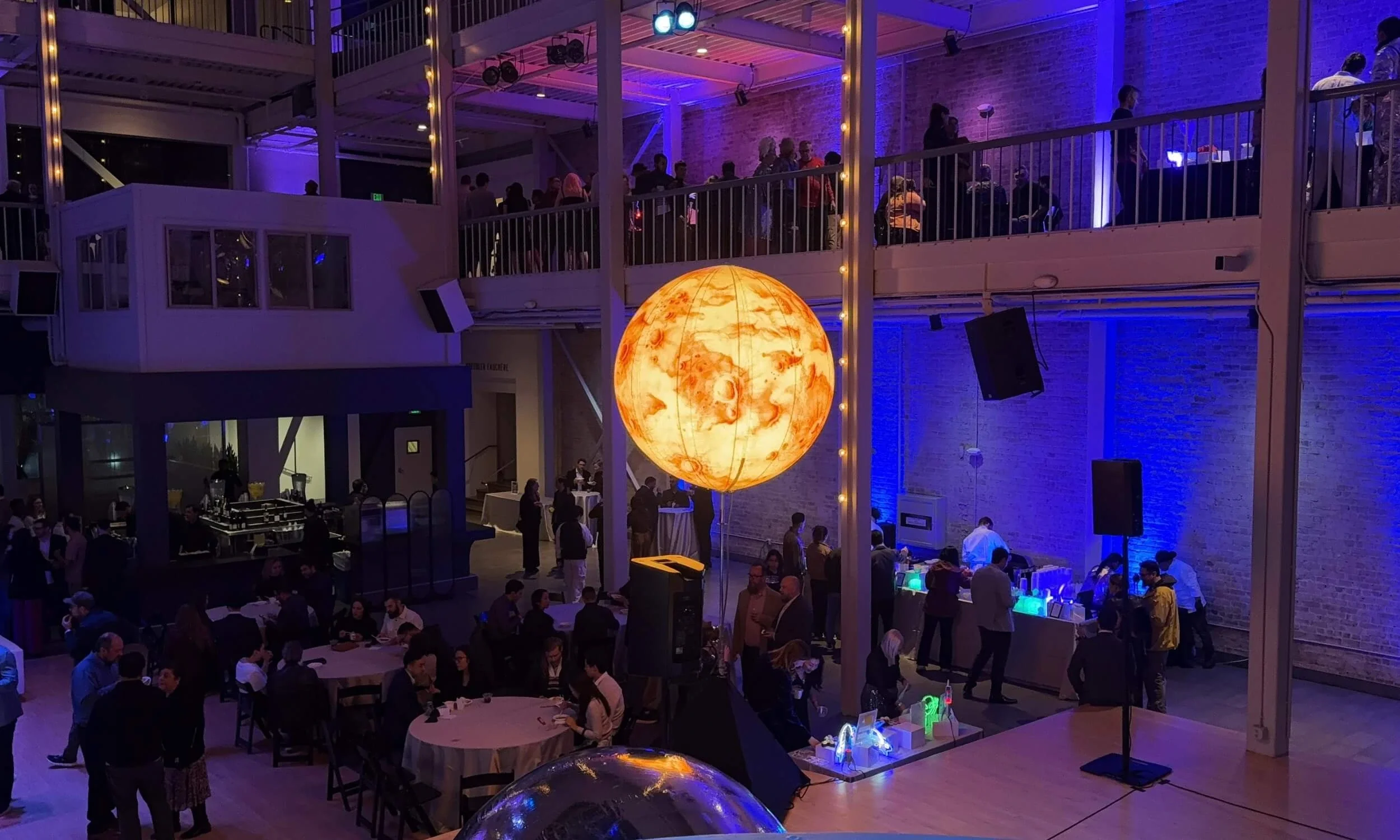
Great event production often goes unnoticed because every element works together naturally. When lighting, sound, design, and timing are carefully coordinated, guests can focus on enjoying the experience rather than thinking about the logistics behind it. When production is thoughtfully planned, people remember how the event felt—not the technology working behind the scenes.
At Culinary Eye, event production supports much more than technical setup. The team approaches every project as a collaboration between culinary storytelling, thoughtful design, and production planning. That philosophy carries into our approach to immersive catering, where food becomes part of the environment rather than a separate service.
Whether creating environments for corporate celebrations, product launches, brand activations, weddings, or private social events, the goal is always the same: to build spaces where food, people, and the event itself feel connected. Culinary installations, spatial layouts, and technical elements develop together from the very beginning so the experience unfolds naturally for every guest.
The same thinking guides our corporate catering and wedding catering services. By planning food alongside production, design, and guest flow, we create experiences where every element works together to support the atmosphere, encourage connection, and leave a lasting impression.
Frequently Asked Questions (FAQs)
What's the difference between event planning and production?
Event planning focuses on organizing an event's logistics, budget, schedule, and vendors. Production focuses on the technical and creative execution, including lighting, audio, staging, video, and the overall guest experience.
When should I hire a production company?
You should hire a production company as early as possible in the planning process. Early involvement allows the team to coordinate technical requirements, venue logistics, timelines, and vendor collaboration before major decisions are finalized.
Does every event need professional event production?
No. Smaller events may only require basic audiovisual support, while larger or more complex events often benefit from professional event production to coordinate technical systems, logistics, and the overall guest experience.
What's included in production costs?
Production costs typically include equipment rental, technical staff, lighting, audio, video, staging, setup, operation during the event, and teardown. The total cost depends on the event's size, venue, production complexity, and technical requirements.
How do I choose the right production company?
Choose a production company with experience managing events similar to yours, a strong portfolio, clear communication, and a collaborative planning process. It's also important to evaluate their technical capabilities, project management approach, and ability to adapt to unexpected changes.
What's the role of a production manager?
A production manager oversees the technical and operational execution of an event. They coordinate schedules, vendors, crews, equipment, and on-site logistics to ensure everything runs smoothly from setup through teardown.
How far in advance should event production be booked?
Event production should ideally be booked 3 to 6 months before the event. Larger productions, complex installations, or peak event seasons may require even more lead time to secure equipment, venues, and production crews.