
Cooking Techniques: Why They Matter More Than Recipes in Cooking Classes

Cooking techniques shape the way people approach food long after a recipe is put away. They help cooks understand how ingredients respond to heat, timing, and seasoning, making it easier to adapt, troubleshoot, and cook with confidence instead of relying on instructions alone.
At Culinary Eye, we host cooking classes that bring those techniques to life through hands-on experience. Once people start chopping, stirring, tasting, and adjusting, they begin to understand what the food is telling them. The recipe becomes a guide rather than the focus, and the cooking itself becomes the lesson.
What Are the Basic Cooking Techniques?
The basic cooking techniques are the core skills that help people prepare food with confidence and consistency. Learning these techniques makes it easier to understand how ingredients respond to heat, seasoning, and timing, allowing cooks to adapt recipes instead of simply following them.
Some of the basic techniques include:
Knife skills: Learning how to cut ingredients safely and consistently for even cooking.
Sautéing: Cooking food quickly over medium to high heat using a small amount of oil.
Roasting: Using dry heat in the oven to develop flavor, texture, and color.
Steaming: Gently cooking food with steam to preserve moisture, texture, and nutrients.
Boiling and simmering: Cooking ingredients in hot liquid at different temperatures depending on the dish.
Seasoning: Understanding how salt, herbs, spices, and acids work together to balance flavor.
Plating and presentation: Arranging food thoughtfully so it is both visually appealing and enjoyable to eat.
At Culinary Eye, these techniques aren't taught through demonstrations alone. Instead, participants develop them through hands-on cooking experiences where chefs provide guidance in real time, helping people understand not just what to do, but why each technique matters.
“Curious What a Class Might Cost?
Every group brings its own needs, and pricing shifts with class style and group size. We’re happy to walk you through the options and help you understand what makes sense for your team. ”
How Culinary Eye Teaches the Basic Cooking Techniques
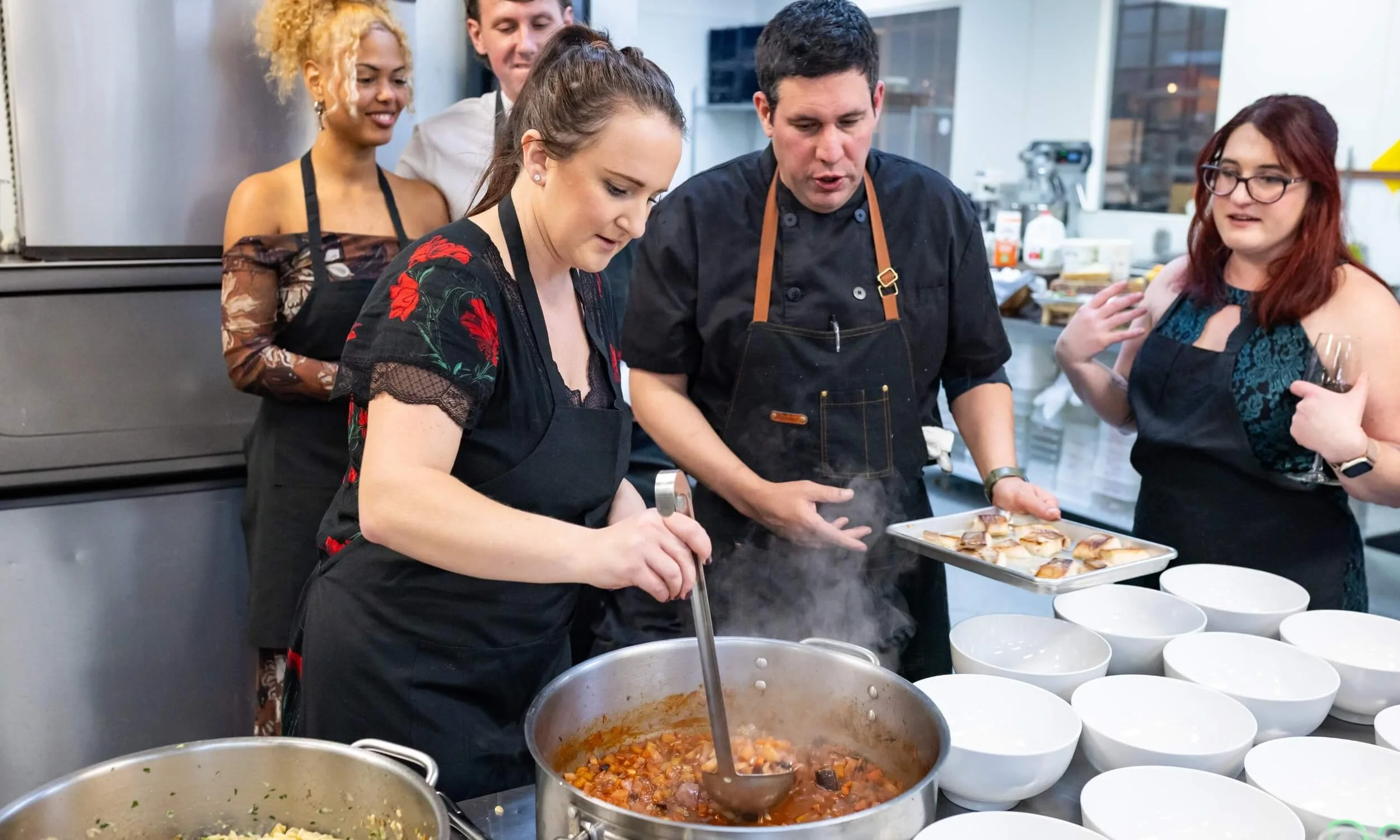
Culinary Eye teaches techniques by letting teams cook in real conditions rather than simply demonstrating recipes. The chefs share quick, clear cues—how heat shifts, how textures change, how seasoning settles—then step back so people can apply them right away. Because guidance happens in the moment, everyone learns through touch, sound, and taste rather than long explanations. The room moves with purpose because the chefs shape the pace without taking over.
As the class builds, the chef points out details people can use in any kitchen. They notice when a cut feels clean, when a reduction reaches the right point, or when a dish needs a small adjustment. These cues help people feel more capable in their own kitchens because they focus on understanding the food rather than memorizing recipes. Each moment gives the group something steady to follow, and the room settles into the work because everyone understands what the food is telling them.
Hands-On Classes: Where Teams Build Everyday Skills
Our interactive cooking classes begin with hands-on sessions that teach the building blocks behind good cooking. Teams learn how heat behaves across pans, how knives respond to angle and pressure, and how seasoning changes a dish long before it reaches the plate. They watch the food shift and learn to respond without waiting for a prompt. These moments help people understand how ingredients react to heat, timing, and seasoning, giving them skills they can use well beyond the class.
Small Bites Sessions: Practicing Quick, Precise Decisions
Small-bite builds teach people to work fast without losing clarity. Because each bite carries its own flavor story, teams see how small decisions matter. They add garnishes, test micro-seasoning, and adjust components that finish at different speeds. As the pace increases, teams learn to focus on details without slowing the room. They discover how cooking techniques support speed, and how precision becomes easier when people trust their instincts.
Boards & Tastings: Building Structure, Contrast & Balance
Boards and tastings shift the focus to balance. Teams build contrast through acidity, texture, and shape. They see how structure affects flavor and how pairings change the experience. They talk through decisions and test combinations they wouldn't try at home. Because the work feels exploratory, people develop a better understanding of flavor, balance, and presentation through conversation and arrangement instead of heat and timing.
Creative Builds: Shaping Dishes Through Play & Composition
The edible nest teaches composition through play. Teams layer textures, shape components, and adjust until the nest holds. They test which elements offer structure and which add softness. They see how composition behaves like flavor—small changes shift everything. Because the format encourages experimentation, people try ideas freely. They learn cooking techniques in a tactile, visual way.
Cooking Techniques in Real Time
Techniques practiced in real time reshape how teams interact. Instead of waiting for direction, people read the room together. Someone sees color deepen in a pan. Someone else hears a change in the sizzle. Another person tastes a missing note. These cues create natural collaboration because everyone responds to the same signals, even when they come from different places in the kitchen.
As the group follows these cues, their decisions start to connect. One person adjusts heat. Another seasons. Someone plates with intention. The work moves forward because everyone contributes to the same moment. Technique becomes the shared reference point, and the team experiences how their choices build on each other. They finish the meal understanding the flow of group cooking and how cooking techniques keep everyone aligned.
Healthy Cooking Techniques in Everyday Cooking
The techniques people learn in class don't just build confidence—they also influence everyday cooking habits. As people become more comfortable in the kitchen, they begin to rely on methods that bring out natural flavor without unnecessary complexity.
Roasting, steaming, sautéing, and thoughtful seasoning help ingredients shine without relying on heavy sauces or excess fat. By paying attention to ingredients, heat, and timing, participants learn simple, healthy cooking techniques they can continue using long after the class ends.
“Planning Something for Your Group?
If your team is exploring a hands-on class that focuses on real cooking techniques, our crew can walk you through what the experience could look like. ”
How Our Approach Carries Into Every Event We Build
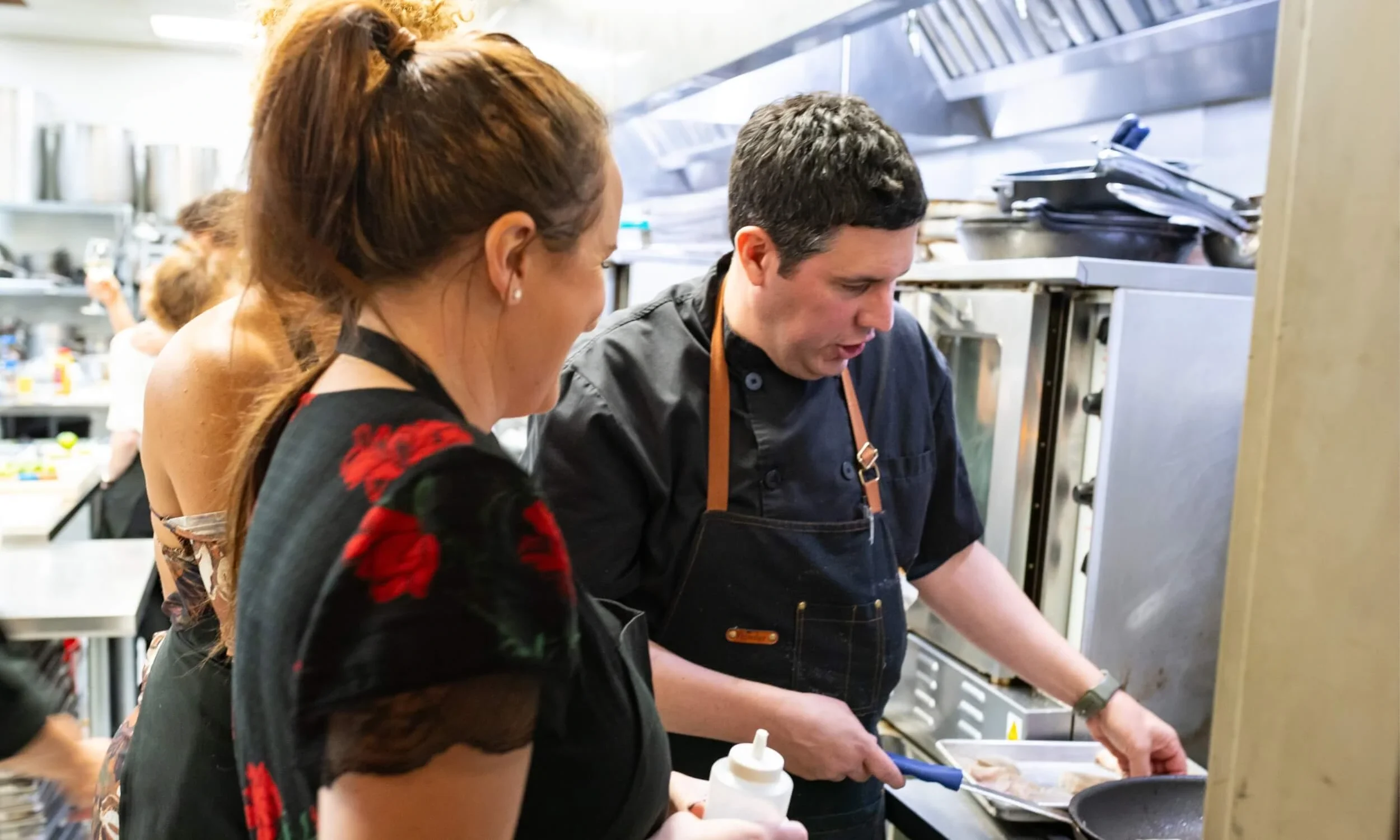
At Culinary Eye, cooking techniques sit behind the way we guide teams through a class. They show people how to pay attention to the food and to each other, which makes the work feel collaborative from the start. Technique becomes a way to steady the room, give people something real to respond to, and help them cook with confidence.
That same approach shapes our broader work as a full-service caterer. Whether we're supporting corporate catering, wedding catering, or any event where people come together, we look at how each dish fits the flow of the day and how it encourages connection. Technique helps us build meals that match the moment—whether the group is cooking beside our chefs or sharing something we prepared for them.
Whether someone is cooking at home or alongside our chefs, strong cooking techniques create the confidence to adapt, experiment, and enjoy the process.
Frequently Asked Questions (FAQs)
What are the most important cooking techniques to learn first?
The most important techniques are knife skills, sautéing, roasting, boiling, steaming, and seasoning. These foundational skills help cooks prepare a wide variety of dishes and make it easier to adapt recipes with confidence.
Why are cooking techniques more important than recipes?
Techniques are more important than recipes because they teach you how ingredients respond to heat, timing, and seasoning. Once you understand these principles, you can adjust recipes, troubleshoot mistakes, and cook with greater confidence.
What is the difference between a cooking method and a cooking technique?
A cooking method refers to the overall way food is prepared, such as roasting or steaming, while a cooking technique is the specific skill used during cooking, such as chopping, searing, or seasoning. Understanding both helps cooks prepare food more effectively.
Can beginners learn techniques in a cooking class?
Yes. Cooking classes are designed for people of all skill levels and teach techniques through hands-on practice. Beginners gain confidence by preparing dishes under the guidance of experienced chefs.
How long does it take to learn basic cooking skills?
Most people can learn basic cooking skills within a few weeks of regular practice or after taking several hands-on cooking classes. Confidence develops by applying the same techniques across different recipes and ingredients.
What happens in a hands-on cooking class?
A hands-on cooking class allows participants to prepare dishes themselves with guidance from a chef. Most classes include ingredient preparation, cooking in small groups, practical instruction, and a shared meal at the end.
Why is steaming food a healthy cooking technique?
Steaming is considered a healthy cooking technique because it cooks food without adding excess fat while helping retain moisture and many heat-sensitive nutrients. It also preserves the natural flavor and texture of vegetables, seafood, and other ingredients, making it a popular option for balanced meals.