
How Many Servers for 100 Guests at an Event?
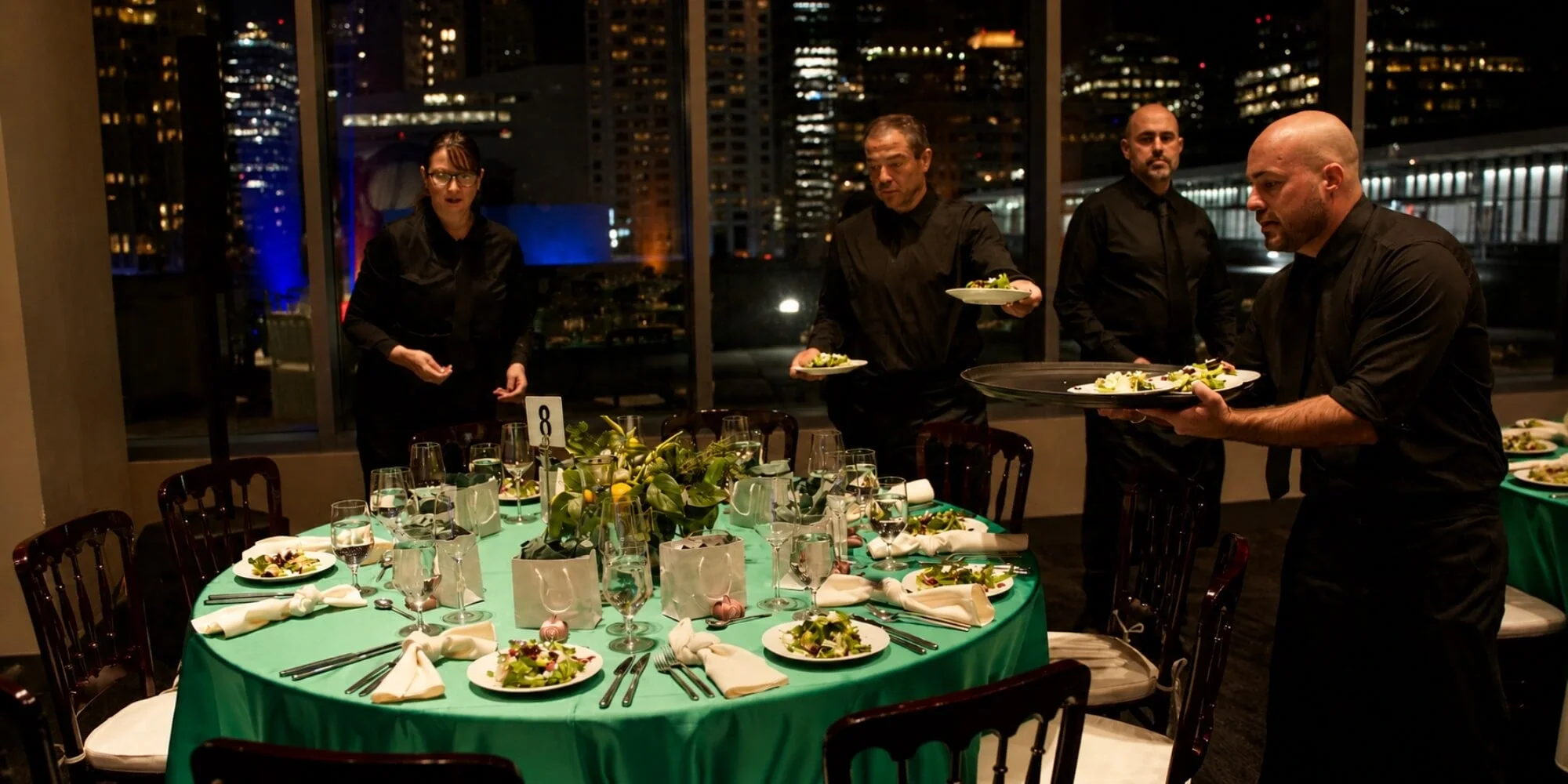
Figuring out how many servers for 100 guests is one of the most common questions event planners face. While guest count provides a useful starting point, service style, venue logistics, and guest expectations can all affect the answer.
Most people focus on the menu first. Yet once guests arrive, service often shapes how the event feels from start to finish. Guests notice when food arrives on time, tables stay clear, and help is available when needed.
At Culinary Eye, we approach staffing as part of the overall guest experience. Alongside catering, event design, and event staffing, we consider how people move through a space, interact with food, and connect with one another throughout the event.
How Many Servers for 100 Guests? (Quick Answer)
Most 100-guest events need between 4 and 10 servers. The right number depends on whether the event is buffet-style, plated, family-style, cocktail-style, or built around food stations.
| Service Style | Recommended Servers |
Notes |
|---|---|---|
| Buffet Service | 4–6 | Guests serve themselves. |
| Plated Dinner | 8–10 | Individual table service. |
| Family-Style | 6–8 | Shared dishes require additional support. |
| Cocktail Reception | 5–8 | Continuous food circulation. |
| Food Stations | 6–10 | Multiple service points. |
Server-To-Guest Ratio for 100 Guests
A helpful server-to-guest ratio gives planners a quick starting point before adjusting for venue layout, timeline, and service expectations. For 100 guests, the ratio changes based on how much direct service is required.
| Service Style | Suggested Server-to-Guest Ratio | Servers for 100 Guests |
|---|---|---|
| Buffet | 1 server per 20–25 guests | 4–6 servers |
| Plated Dinner | 1 server per 10–12 guests | 8–10 servers |
| Family-Style | 1 server per 12–16 guests | 6–8 servers |
| Cocktail Reception | 1 server per 12–20 guests | 5–8 servers |
| Food Stations | Varies by number of stations | 6–10 servers |
These ratios are not fixed rules, but they help planners estimate the waitstaff needed for a party before accounting for bars, chef stations, setup, cleanup, and venue logistics.
How Many Waitstaff for 100 Guests Based on Service Style
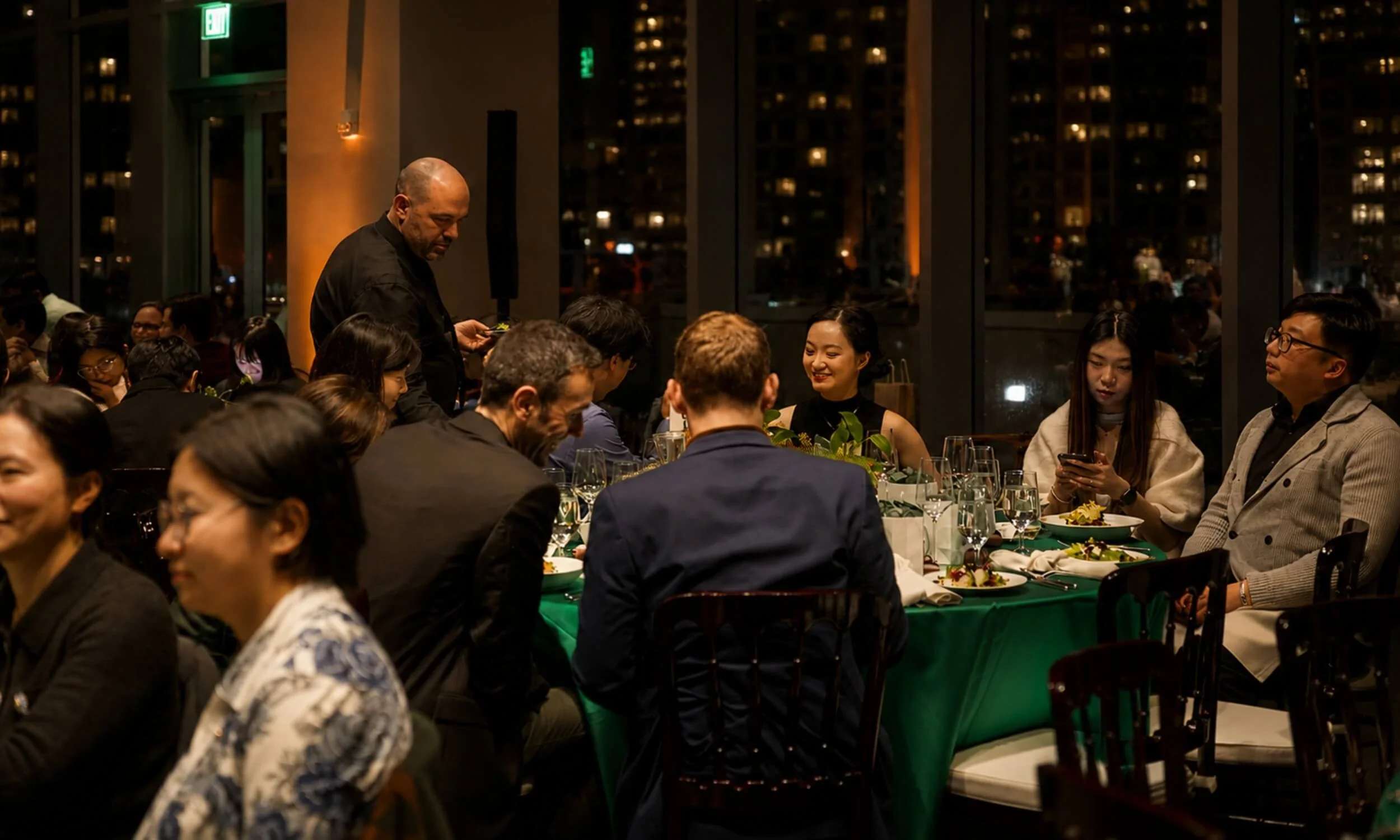
When determining how many servers for 100 guests, service style usually provides the clearest starting point. A buffet dinner and a plated reception may host the same number of people, yet they create very different service demands once guests arrive.
Buffet Service
Buffets often require fewer servers because guests serve themselves. However, that does not mean the service team has less to do. Keeping the experience organized and comfortable still requires consistent attention throughout the event.
Food remains stocked throughout service
Tables stay clear and ready for incoming guests
Dining areas remain organized and welcoming
Team members assist guests when questions arise
Most buffet events operate comfortably with 4–6 servers for 100 guests.
Plated Dinner Service
Plated service places the greatest emphasis on timing and coordination. Every table expects a similar pace, which means the service team needs to work together throughout the meal.
Courses arrive within a narrow service window
Beverage service continues throughout dinner
Used plates are cleared between courses
Guest requests receive prompt attention
Guests notice delays quickly during plated service because everyone experiences the meal at roughly the same time. Most plated dinners require 8–10 servers for 100 guests.
Family-Style Service
Family-style dining encourages guests to share dishes and interact with one another. Even so, the service team plays an important role in keeping the meal moving smoothly.
Shared platters are delivered to each table
Serving dishes are refreshed as needed
Empty platters and dishes are removed throughout the meal
Tables remain comfortable and uncluttered
Most family-style events work well with 6–8 servers for 100 guests.
Cocktail Reception
Cocktail receptions create different staffing needs because guests rarely stay in one place for long. Instead of focusing only on tables, servers support movement throughout the venue.
Passed appetizers circulate continuously
Glassware collection happens throughout the event
Food displays remain stocked and presentable
Coverage extends across multiple gathering areas
Because guests spread out rather than remain seated, coverage matters just as much as headcount. Most cocktail-style receptions require 5–8 servers for 100 guests.
Food Stations and Interactive Experiences
Food stations can look self-sufficient from a guest perspective. Behind the scenes, however, several stations often need attention at the same time. That becomes even more important when chefs or attendants interact directly with guests.
Multiple service areas operate simultaneously
Guests receive guidance as they move between stations
Presentations stay fresh throughout service
Individual stations may require dedicated attendants
Interactive formats can change the traditional server-to-guest ratio, especially when several culinary experiences operate at once. Most station-based events require 6–10 servers for 100 guests.
How Event Details Affect Staffing Needs
Once you've established a starting point, the question of how many servers for 100 guests depends on more than service style alone. Two events with the same attendance can require very different levels of support based on their layout, timeline, and guest experience goals.
Before finalizing staffing numbers, consider the factors below.
Multi-course menus require more table interaction
Specialty cocktails increase beverage service demands
Large venues create longer travel distances
Outdoor events introduce additional logistical challenges
Longer timelines require sustained service coverage
Multiple food stations create separate service zones
Setup and breakdown responsibilities add labor requirements
Guest-facing experiences often need dedicated team members
When planners calculate how many servers for 100 guests, these operational details often make the biggest difference. A 100-person dinner in a single room operates differently than a 100-person event spread across several spaces. The guest count stays the same, but the workload changes considerably.
“Need a Staffing Estimate for 100 Guests?
Every event has its own requirements, from service style to venue logistics. If you’d like a clearer picture of staffing needs and pricing for your event, you can reach out to our team for a personalized estimate.”
Event Server Staffing Calculator
If you're still trying to determine how many servers for 100 guests, a simple staffing calculation can help narrow the range. While every event includes unique variables, a structured approach makes planning much easier.
Use the following process as a guide.
Determine the service format.
Select the recommended staffing range.
Add support for bars or food stations.
Evaluate venue logistics.
Include setup and breakdown requirements.
Adjust based on guest expectations.
For example, imagine a reception with three food stations, beverage service, and 100 attendees.
Base staffing: 6 servers
Station support: 2 servers
Beverage support: 1 server
Estimated total: 9 servers.
If you're calculating how many servers for 100 guests for your own event, this framework provides a practical starting point while leaving room for event-specific adjustments.
Real Examples for Different Event Types
Staffing needs change depending on the event format, timeline, and guest flow. Here are a few common examples.
Corporate Luncheon
Many business events run on a strict schedule. Lunch service often takes place between presentations, meetings, or breakout sessions.
In these settings, plates need to disappear quickly and beverage service must continue without interrupting speakers. Corporate events often benefit from a team that understands timing as well as hospitality. Effective corporate event staffing supports the agenda without disrupting presentations, discussions, or networking opportunities.
Wedding Reception
Weddings rarely rely on a single service style.
Guests may begin with passed appetizers, transition into a seated dinner, and later gather around dessert displays or late-night snacks.
That progression often requires staffing adjustments throughout the event. Many planners use a wedding staffing guide when mapping service needs across different phases of the reception. Professional services also allocate team members differently during cocktail hour, dinner service, and evening celebrations.
Birthday Celebration
A casual birthday buffet creates one set of staffing requirements. A milestone celebration featuring chef stations, signature drinks, and interactive food displays creates another.
The occasion itself matters less than the experience being created. As guest interaction increases, staffing often needs to increase alongside it.
Holiday Party
Holiday events encourage guests to move between conversations, revisit food stations, and spend time in different areas of the venue.
Service teams often spend less time at tables and more time supporting beverage areas, food displays, and guest flow. Because of this dynamic environment, the waitstaff needed for party settings often differs from traditional dinner service.
Fundraising Event
Fundraisers frequently combine dining, presentations, entertainment, and donor engagement activities.
Service teams often balance food service with auctions, presentations, and guest engagement activities. In these situations, flexibility becomes just as valuable as staffing numbers.
These examples show why staffing decisions depend on more than guest count alone. Service style, event flow, and guest interaction all influence the final number.
How Culinary Eye Plans Staffing Around the Full Experience
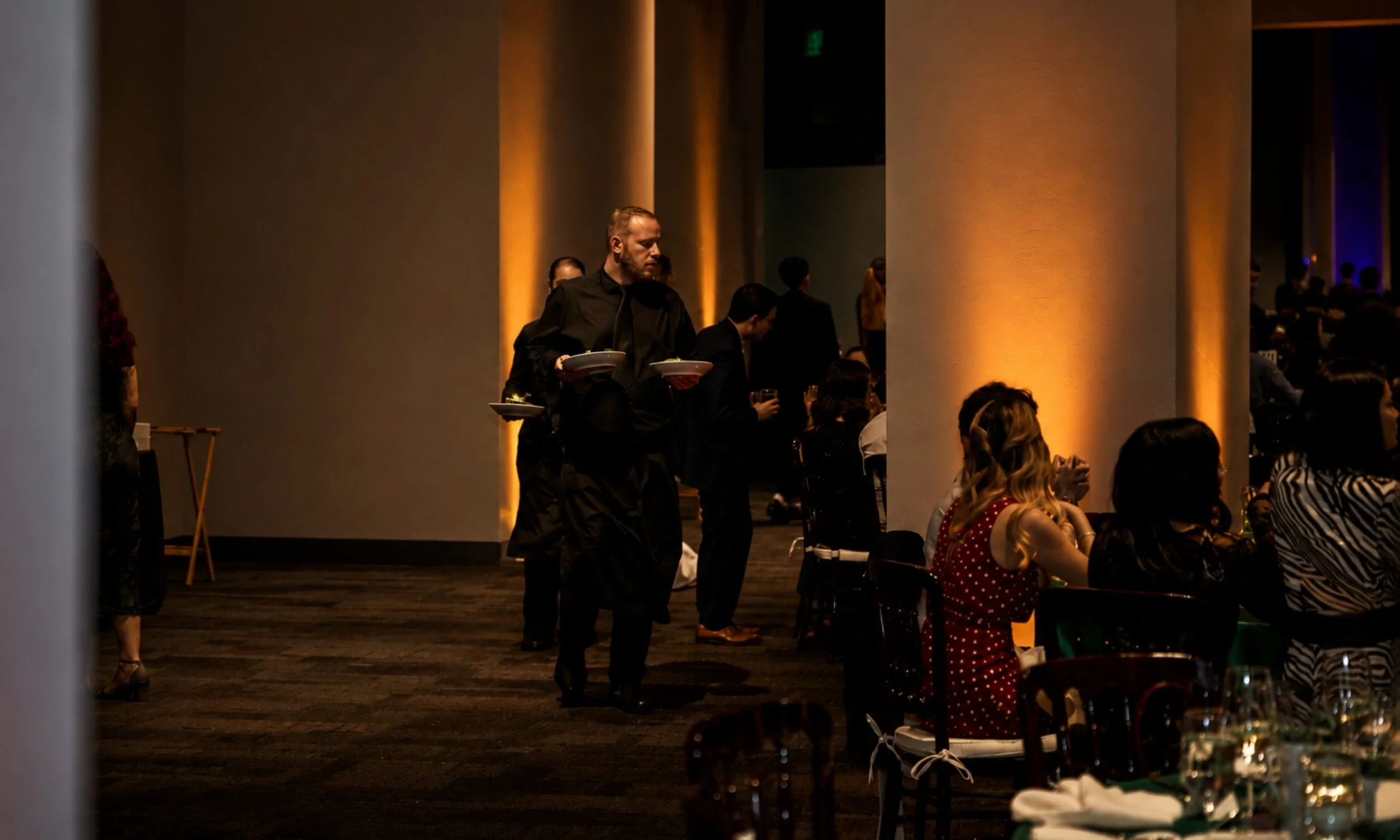
At Culinary Eye, conversations about how many servers for 100 guests rarely begin with a number alone.
We first look at how guests will interact with the food, the space, and one another throughout the event. A grazing installation, a chef-led station, and a seated dinner each create different service needs. The same guest count can produce entirely different staffing plans.
This approach carries through every event we produce, whether we're providing corporate catering services or catering for weddings. That is why the question of how many servers for 100 guests often depends on far more than attendance alone.
For us, staffing supports the overall experience. Food, service, design, and guest interaction should work together from beginning to end.
“Planning Something a Little Different?
Some events call for more than a standard service plan. Whether you’re envisioning interactive food stations, chef-led experiences, or a gathering built around a specific theme, we’re happy to help explore what might fit your event.”
Frequently Asked Questions (FAQs)
Is 4 servers enough for 100 guests?
Yes, 4 servers can be enough for 100 guests at a simple buffet event. However, plated dinners, cocktail receptions, family-style meals, and events with multiple food stations typically require additional staff to maintain service quality and guest comfort.
How many servers do I need for a buffet of 100 people?
Most buffet events with 100 guests require 4–6 servers. The exact number depends on factors such as venue size, event duration, beverage service, and the amount of table clearing needed throughout the event.
How many catering staff are needed for 100 guests?
The number of catering staff for 100 guests typically ranges from 4 to 10 people. The exact staffing level depends on service style, menu complexity, venue layout, beverage service, and guest experience expectations.
Does a bartender count as a server?
No, bartenders are typically counted separately from servers. While both support the guest experience, bartenders focus on beverage service, whereas servers handle food service, table maintenance, and guest assistance.
Should I hire extra waitstaff for setup and cleanup?
Yes, hiring extra waitstaff for setup and cleanup can improve efficiency before and after the event. Additional support helps with table setup, station preparation, breakdown, and post-event cleanup without affecting guest service.